 RockCloud-基石云安全-官方博客
Conclusion First
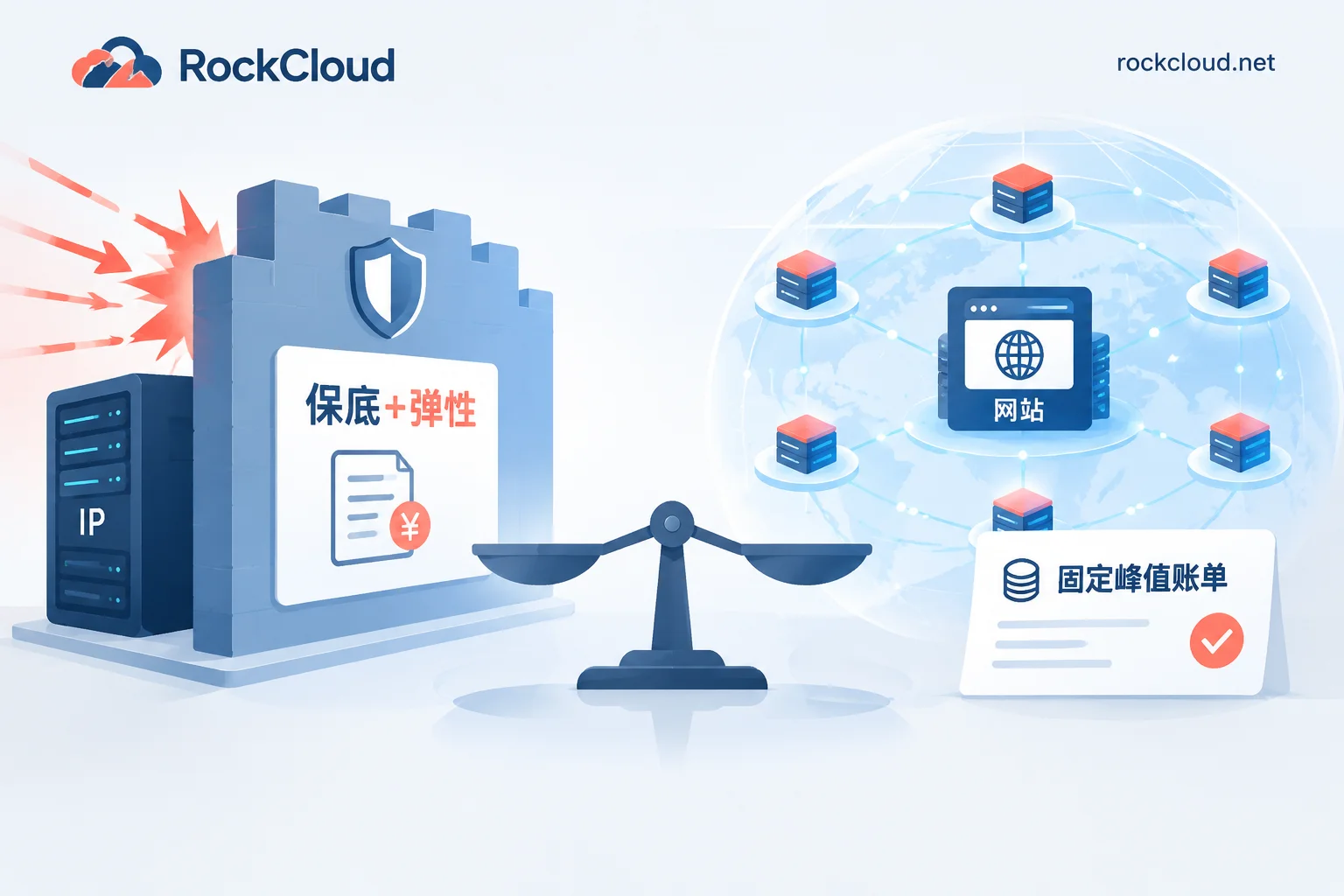
- Pure Web / API businesses (HTTP, HTTPS, WebSocket): High-defense CDN usually has lower initial and long-term holding costs than high-defense IP. High-defense IP generally starts at thousands to tens of thousands of yuan per month. High-defense CDN is often billed by business bandwidth peak or package, with common starting prices from hundreds to thousands of yuan.
- Businesses with Layer 4 TCP/UDP, private protocols, or non-standard ports (game clients, login servers, long connection services): Ordinary high-defense CDN cannot proxy and forward these. In this case, you can only choose between high-defense IP and game shield solutions, and comparing with CDN is not applicable.
- Hybrid businesses with both types: Web parts go through CDN, Layer 4 parts are protected separately. For common combination architectures, refer to Can High-Defense IP and High-Defense CDN Be Used Together?.
So the first step in comparing prices is to confirm the protocol, then look at the price.
Where the Money Goes for High-Defense IP
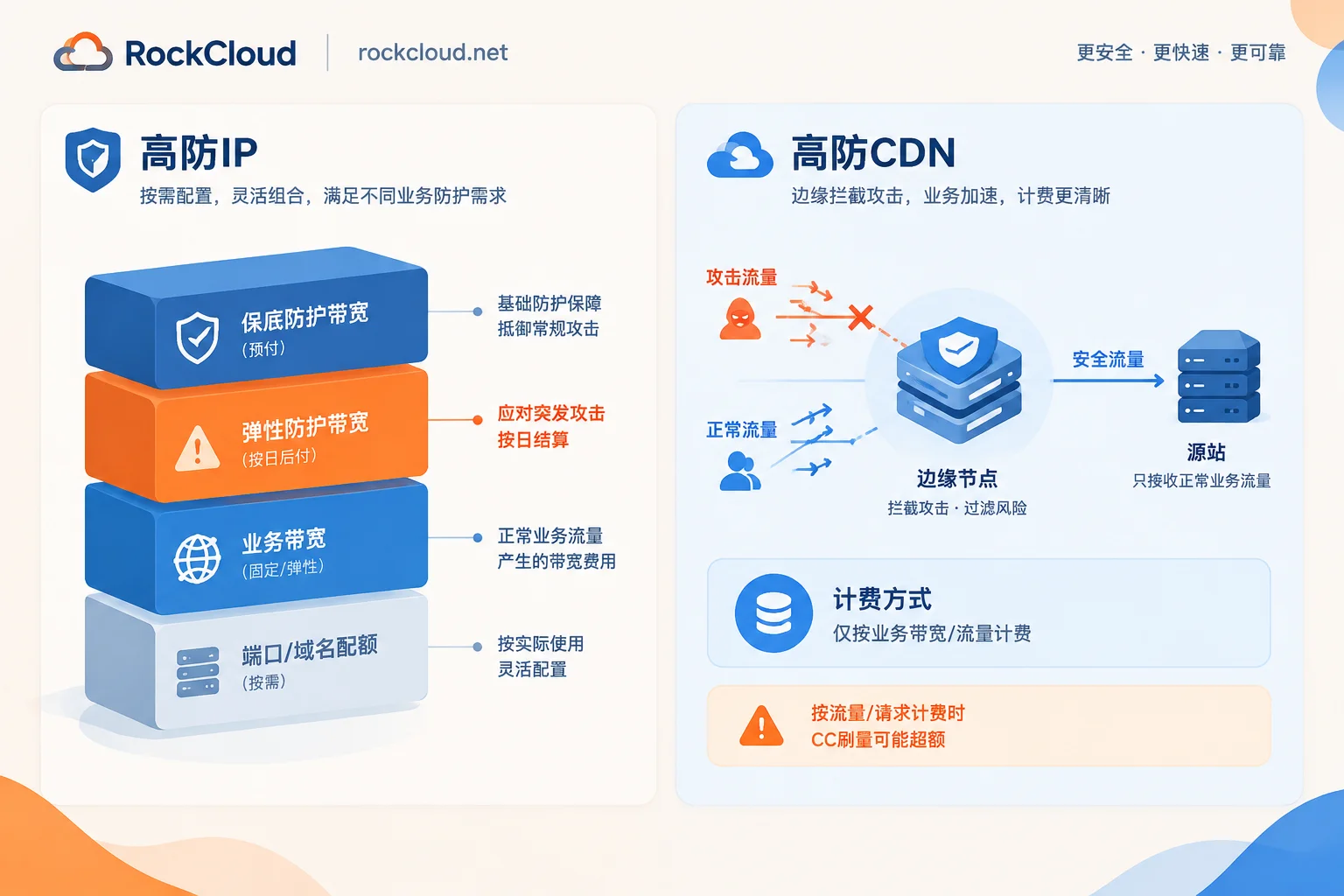
High-defense IP reserves large bandwidth cleaning resources for one or a few exclusive IPs, so billing is combined and usually includes four items:
- Base protection bandwidth (prepaid, monthly): This is the main part of the price, commonly starting from 20G, 30G, 50G tiers. According to Alibaba Cloud documentation, the China mainland professional version 30Gbps base is about 20,800 yuan/month, and the non-China mainland version starts between 15,000 and 28,000 yuan/month. Specific prices are subject to the vendor's current official page.
- Elastic protection bandwidth (postpaid by day): When attacks exceed the base threshold and elastic protection is enabled, billing is based on the highest attack peak of the day. A single day's bill can reach thousands to tens of thousands of yuan.
- Business bandwidth: This corresponds to normal access traffic. The part exceeding the purchased specification requires an additional elastic business bandwidth fee.
- Port and domain quotas: Exceeding the package's number of ports and domains also incurs extra charges.
When budgeting, don't just look at the base price; add the elastic fees for "being attacked for several consecutive days in the worst case." Many teams exceed budget because this postpaid part is not included.
Where the Money Goes for High-Defense CDN
High-defense CDN relies on edge nodes distributed across locations to share cleaning, and mainly measures normal business consumption, i.e., downstream traffic or bandwidth peak. Attack traffic is generally cleaned at the edge and not directly counted as normal bandwidth.
One exception to note: For CDNs billed by traffic or requests, if high-frequency CC attacks are not blocked by protection policies, the generated requests will be billed as normal access, potentially leading to overage bills at the end of the month.
If your business has frequently encountered CC attacks, choosing a "fixed peak billing, unlimited traffic" plan will make costs more controllable. If you're unsure which type of attack you're facing, you can first confirm with Four-Step Troubleshooting to Determine DDoS or CC Attacks. There are several different peak billing algorithms; before signing, clarify which one is used, see How High-Defense CDN Peak Billing Is Calculated.
Two Commonly Overlooked Costs in the Total Bill
Origin cost. CDN caches static resources at edge nodes; for websites with high proportions of images, scripts, and styles, most requests can be returned directly at the edge. This allows origin server and bandwidth specifications to be kept relatively low. High-defense IP only performs cleaning and forwarding; all normal requests still return to the origin, so origin specifications must be configured for full traffic.
Acceleration cost. High-defense CDN's acceleration and defense use the same link; access only requires changing DNS CNAME, and usually includes SSL and WAF filtering. High-defense IP is essentially a traffic牵引 cleaning gateway; non-Anycast high-defense IP generally has no nearby acceleration effect. Traffic detours through the cleaning center, and latency may increase. If you later want to improve access speed, you'll need to buy another CDN, stacking two costs.
Ask These Questions One by One When Getting Quotes
- What is the billing basis: bandwidth peak, traffic, or number of requests? Which peak measurement method is used?
- Are attack traffic and blocked requests counted in billing?
- How are charges applied after exceeding the base or package? Are there postpaid elastic items? Is there a daily cap?
- Are defense, WAF, and SSL included in the package or purchased separately?
- What are the limits on ports and domains, and how are overages charged?
- Can you test with real traffic before signing a contract?
Once these are clear, the two quotes can be compared on the same basis.
Implementation by Business Type
For HTTP(S) businesses like web, API, payment pages, and live streaming pages, prioritize high-defense CDN. When selecting a plan, focus on three points: fixed peak billing, unlimited traffic, and defense at no extra charge.
RockCloud's high-defense CDN is billed by fixed peak, unlimited traffic, with acceleration and defense on the same link, charging only one fee, including free SSL, and using contract pricing. It is recommended to first integrate real business with a free test, run for a period, and understand your peak and blocking situation before deciding on specifications: Packages and Free Test.
For Layer 4 businesses like games and long connections, ordinary high-defense CDN cannot be used. You can look at Game Shield, which supports TCP/UDP, private protocol encapsulation, and can hide the origin, then compare it with high-defense IP item by item using the checklist above.


Comments(0)