RockCloud-基石云安全-官方博客
In the current gaming market, DDoS attacks have evolved from simple traffic floods to sophisticated CC attacks targeting API interfaces, and long-term attrition warfare using residential proxies to simulate real players. For game operations teams, the biggest pain point is: when an attack occurs, switching protection often comes with unavoidable latency or packet loss, and can even cause mass player disconnections.
Normalization of Attacks: Why Traditional Emergency Models Fail
Many teams are accustomed to "emergency access to high-defense IP after being attacked." However, the fatal weakness of this approach is that DNS cache TTL causes the business to remain exposed during the switch, and simple traffic blocking often cannot handle CC attacks against private protocols. To achieve true normalized governance, an architecture that integrates defense, acceleration, and concealment is needed.
RockCloud Defense Architecture: Deep Integration of Defense and Acceleration
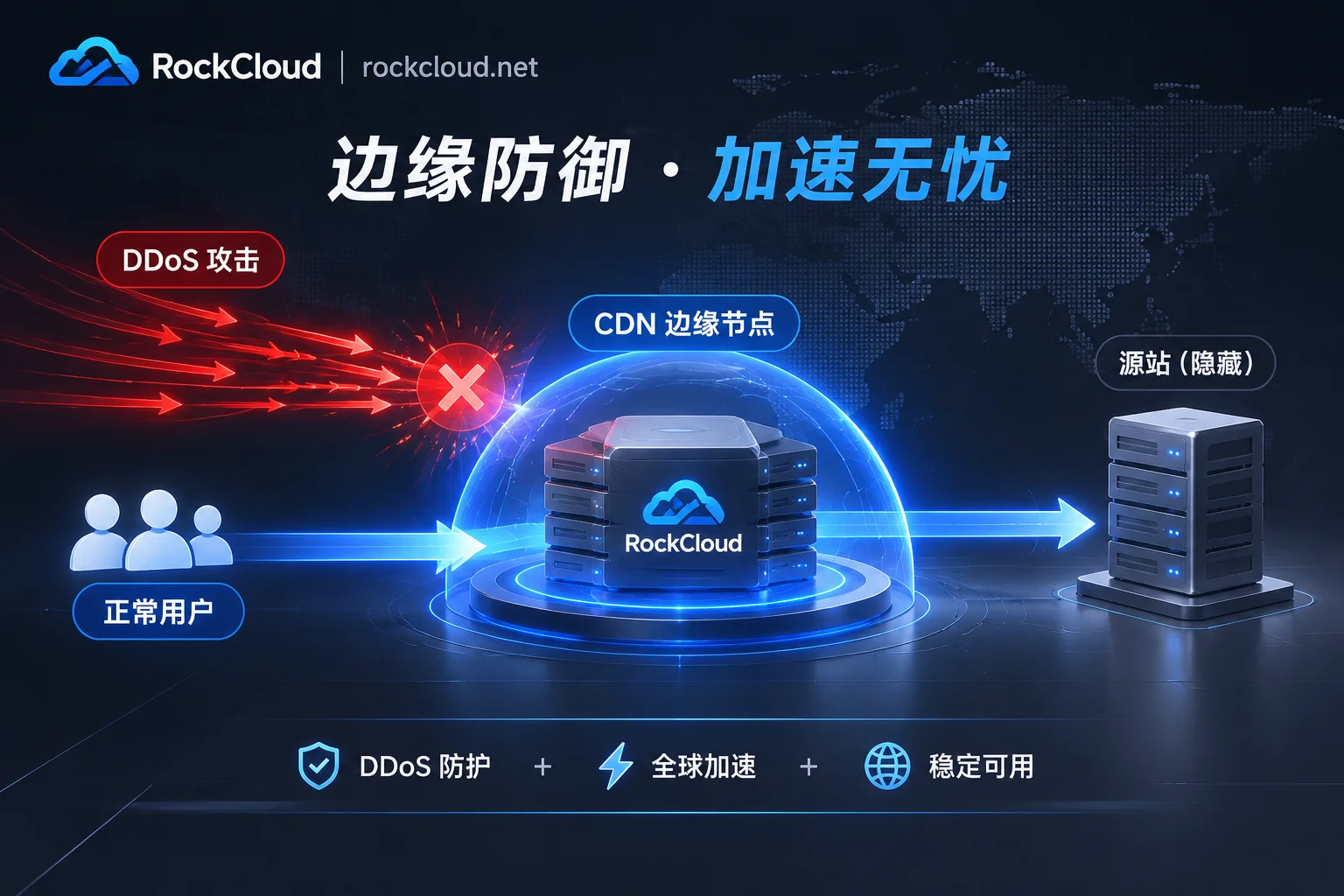
The protection system provided by RockCloud is not simply about "blocking," but about building an edge defense line that is transparent to attackers and extremely fast for legitimate players through technical means.
1. Business Stealth: One-Click CNAME Access
With high-defense CDN, you can fully hide your origin server IP. Unlike traditional NS access, RockCloud supports CNAME access, which requires no changes to your existing DNS, allowing you to keep your original service provider while achieving a parallel high-defense link. During access, we recommend simultaneously changing the origin IP to ensure that attack traffic cannot directly locate your real server through cached records.
2. Full Protocol Defense: Private Protocol Encapsulation by Game Shield
For TCP/UDP-based game services, Game Shield can encapsulate non-HTTP protocols privately and forward them through distributed edge nodes. When a specific edge node is hit by heavy traffic attacks, the system automatically switches to a high-defense node, achieving seamless switching and effectively solving the "disconnection" problem that game businesses fear most.
3. Intelligent WAF and Machine Learning
Beyond DDoS, logical attacks targeting APIs such as login and payment are equally deadly. RockCloud provides an intelligent WEB firewall in the control panel, integrating OWASP core rule sets and supplemented by machine learning to identify unknown threats, building the last line of defense for your backend logic.
Why Choose RockCloud?
- Defense and acceleration on the same link: No need to purchase defense and CDN separately; within the same package, you can enjoy DDoS/CC defense, global acceleration, and CN2 direct connection optimization simultaneously.
- Fully automated deployment: Includes practical features such as fully automatic SSL management and domain blocking and recovery, solving trivial challenges in business operations.
- Transparent cost structure: Packages are billed by fixed peak, with unlimited traffic and requests, completely eliminating the "sky-high bill" trap of pay-as-you-go.
Start Building Your Normalized Defense Line Now
There's no need to wait until you're attacked to think about defense. You can first compare the differences between different protection solutions, or directly contact us to apply for a free test from our security technical team and get a customized assessment for your business protocols.
For more industry solutions, please visit the RockCloud Solution Center.