 RockCloud-基石云安全-官方博客

DDoS Emergency Response: A Fireline Self-Rescue Guide for the "10-Minute Pulse Blackhole" and Over 70% Secondary Counterattacks
When 82% of network-layer DDoS attacks end within 10 minutes but are enough to trigger hours-long "blackhole blocking" on cloud hosts, and over 70% of victims face an average of 2.8 secondary counterattacks, traditional ticket-based troubleshooting is long obsolete. This article breaks down the fireline stop-the-bleeding SOP during an attack: how to use CNAME parallel switching without changing NS, source IP whitening and whitelist lockdown, and L3/L4/L7 same-path scrubbing to restore business in the shortest time and block subsequent连环 strikes.

DDoS Attack Incoming: Don't Let Your Business Crash While 'Waiting for Response' — RockCloud Emergency Response Manual
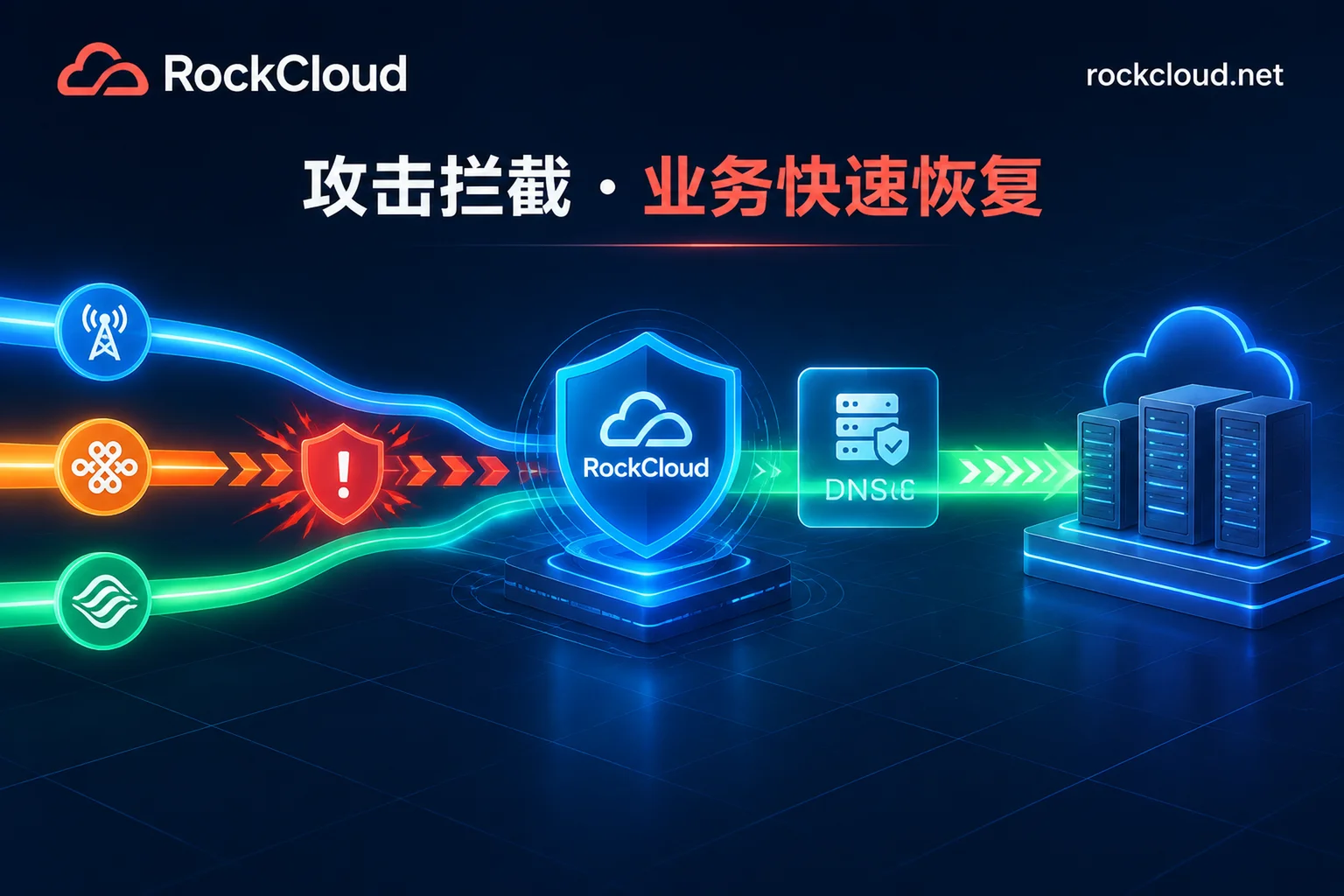
When your business suffers a sudden DDoS attack, every second lost means lost users and revenue. This article summarizes an emergency avoidance guide during an attack and explores how RockCloud's high-defense CDN enables 'minute-level' rapid onboarding, hiding the origin server while integrating defense and acceleration to help your business run smoothly through the storm.

How to Tell If Your Website Is Under DDoS or CC Attack: Four-Step Diagnosis and Response
When a website suddenly goes down, three things can roughly distinguish the cause: whether bandwidth and packet volume spike, whether you can still log in to the server, and whether access logs show a flood of requests.

Your Website Is Under a Large-Scale Attack: Fast CDN Onboarding Order and Lockdown Essentials
When an attack is already underway, mounting a CDN isn't just about registering an account. This article lays out the actual hands-on order: configure origin pull and certificates on the CDN side, verify the path with hosts, then switch DNS, then lock down the origin firewall or change IPs, and finally enable edge emergency mode—plus handling exceptions like TTL caching, API services that can't go through challenges, and an origin that's already been blackholed.

DDoS Attack Log Analysis and Traceback Methods: Layered Forensics and Response When Bandwidth Is Saturated
When a server's bandwidth is saturated or CPU is maxed out, this article provides a layered log-based forensics method to classify the attack type by analyzing inbound traffic characteristics, L4 connection states, and L7 access records, and map them to actionable response actions.