RockCloud-基石云安全-官方博客

API and Dynamic Interface CC Defense: Tackling Low-Frequency Slow Attacks, Residential Proxies, and High-Concurrency API Abuse
CC attacks increasingly use massive residential proxies to launch low-frequency slow requests, precisely targeting high-consumption dynamic interfaces such as APIs, login, search, and AI inference. This article analyzes why traditional static rate limiting and pop-up verification fail in API scenarios, and provides a CC defense solution that balances anti-abuse and business continuity by combining high-defense CDN, machine learning WAF, security tokens, and unlimited request billing.
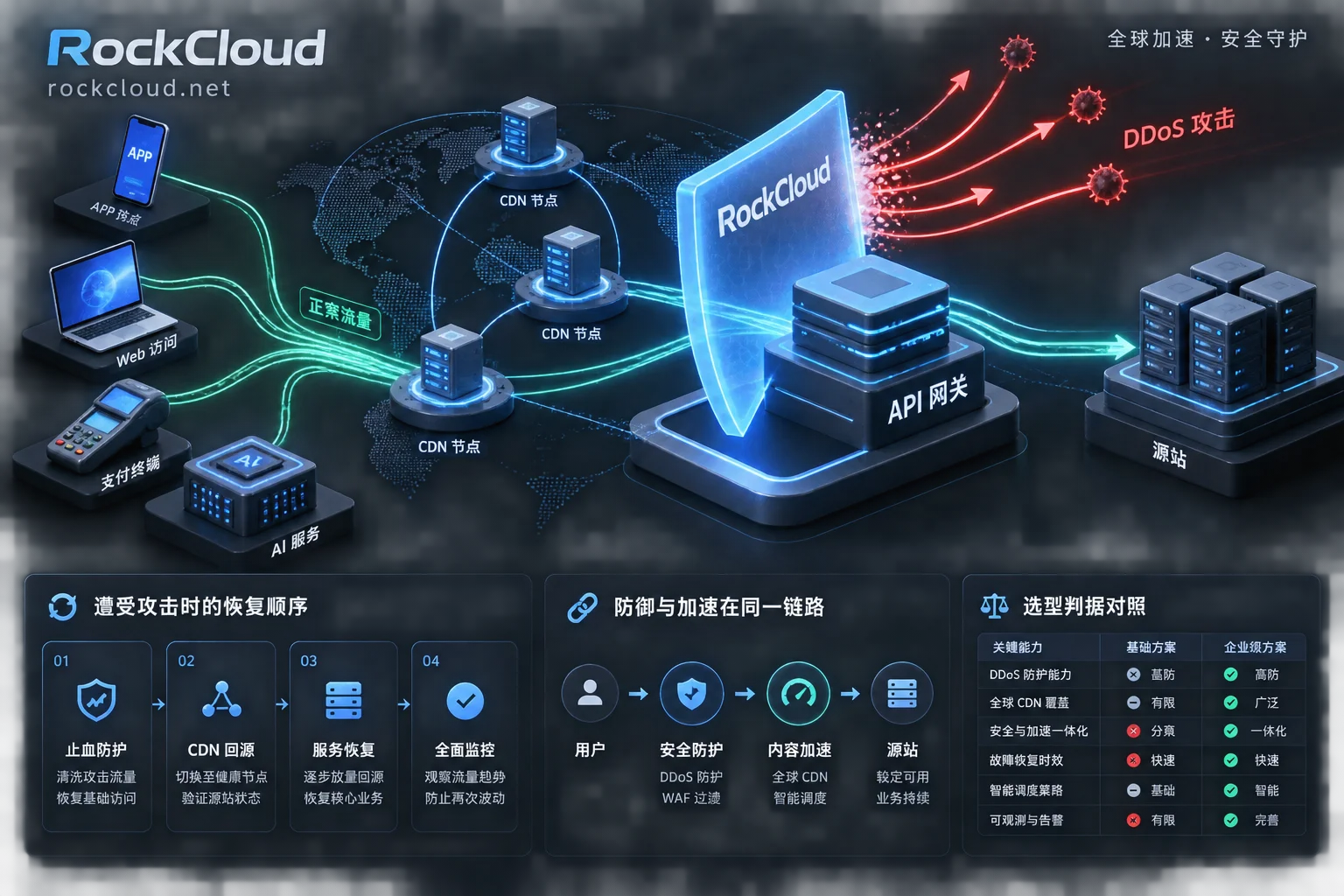
How to Implement API DDoS Protection: Architecture for Mitigating Multi-Vector Attacks Without Blocking Legitimate Clients
This article addresses API services such as app backends, payment gateways, and AI model interfaces, analyzing the characteristics of multi-vector DDoS attacks combining Layer 4 traffic floods and Layer 7 concurrency. It explores how to implement API DDoS protection without affecting legitimate clients and callback notifications, using Anycast scrubbing, intelligent WAF exception rules, TLS 1.3 0-RTT acceleration, and fixed peak billing architecture.

Bot Management in the Age of AI Agents: Interpreting Enterprise Automation Threats and Selecting Defense Architectures
As AI agents reshape internet traffic, enterprises must evolve from basic crawler defense to sophisticated bot management, leveraging edge solutions like RockCloud for comprehensive protection.

2026 Surge in Web Application Attacks: How Enterprises Can Reshape Intelligent WAF Protection Amid High-Risk 0day Exposures?
In 2026, web application attacks are surging, with high-risk 0day vulnerabilities being quickly exploited; enterprises must upgrade to intelligent WAF solutions that incorporate edge virtual patching, AI behavioral analysis, and CDN integration.

Practical Guide to Application-Layer Attack Defense: How Enterprises Can Restructure L7 Protection Against Realistic Bots and API Surge
Enterprises must adopt layered defense, including edge filtering, behavioral WAF, and source hiding, to counter sophisticated L7 attacks like high-fidelity bots and API abuse.