RockCloud-基石云安全-官方博客

How to Protect Game Servers from DDoS During New Game Launches and Major Promotions: A Defense Guide Against Pulse Floods and Simulated Player Connect
In light of recent DDoS attacks on multiple new game launches that caused login failures and disconnections, this article analyzes three new threats facing the gaming industry—second-level pulse floods, simulated real-player protocol connections, and subnet carpet bombing—and provides a practical architecture using game shield combined with high-defense CDN for full-link protection with unlimited traffic.

Why DDoS Attacks Cause Mass Disconnects in Games: How Game Shield Switches Nodes Without Dropping Connections
Real-time competitive and card games facing DDoS or TCP/UDP protocol attacks often suffer not just packet loss but mass disconnections, state rollbacks, and reconnection avalanches. This article breaks down three core protection mechanisms of Game Shield: private protocol encapsulation, distributed edge forwarding, and seamless node switching under attack, enabling full TCP/UDP protocol forwarding and preventing disconnections.

Do You Need High-Protection for Hong Kong Servers? Assess Attack Risk First, Then Choose Your Defense Architecture Based on Business Protocol
Most Hong Kong servers don't need high-protection models directly. This article explains the blackhole risk after an attack on a regular Hong Kong server, then provides more cost-effective and resilient defense architectures for websites/APIs, games and private protocols, and legacy systems, along with conditions to confirm before deployment.
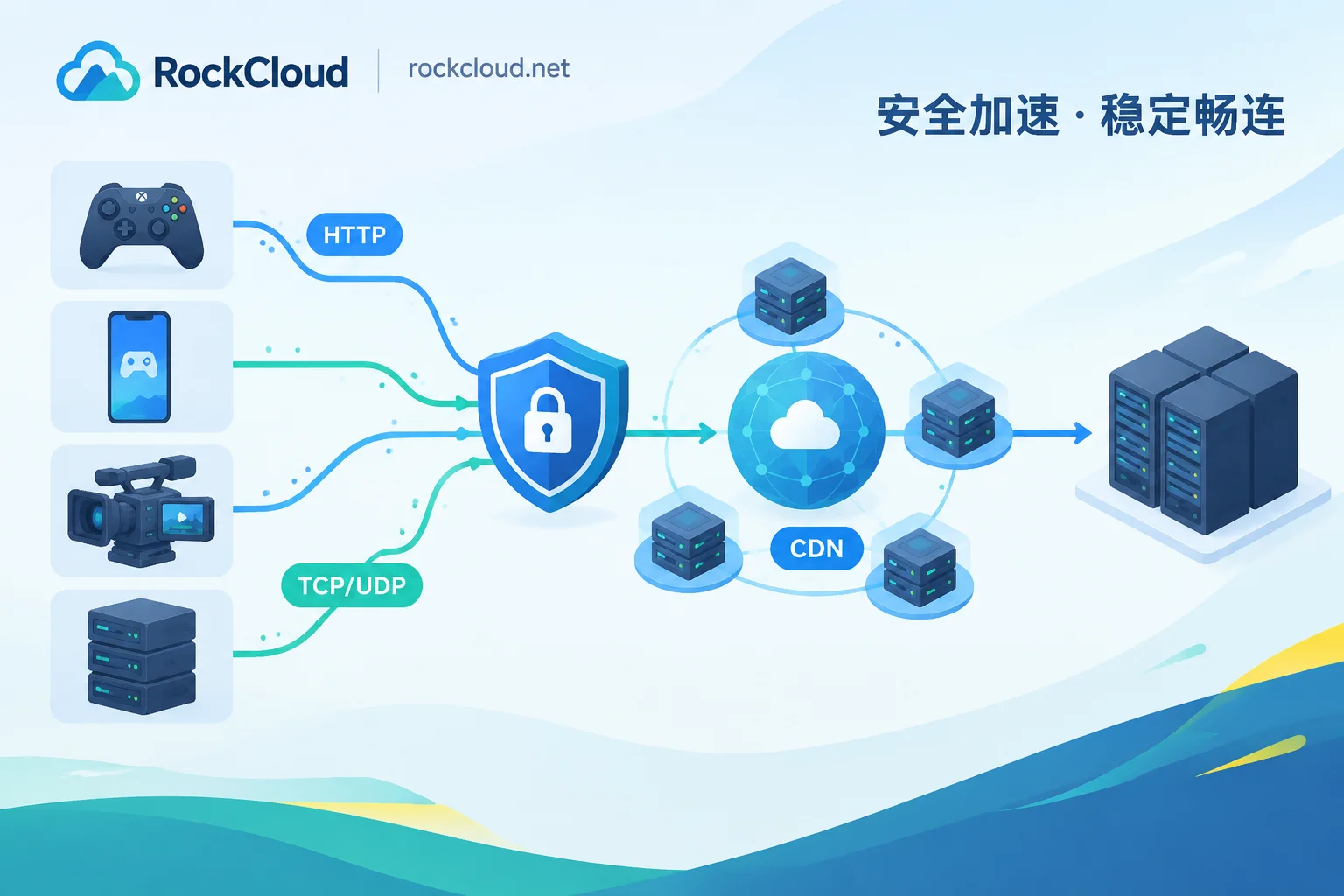
Can Non-Website Services Use Anti-DDoS CDN? Identify the Protocol First, Then Choose Anti-DDoS CDN, Layer 4 Proxy, or Game Shield
If your service uses HTTP/HTTPS, it can connect directly to an anti-DDoS CDN; if it uses raw TCP/UDP or a private protocol, traditional anti-DDoS CDNs cannot handle it, and you need a Layer 4 proxy, anti-DDoS IP, or game shield instead. This article selects solutions based on four criteria: protocol, client, port, and origin hiding requirements, and lists pre-integration checks for real IP, origin exposure, and hybrid service splitting.

In 2026, Hackers Have AI: DDoS Defense Gets Much Harder, But RockCloud Still Handles It Easily
In 2026, AI scripts paired with residential proxies make CC attacks look like real user traffic, and massive volumetric attacks often end within minutes—too fast for manual response. This article explains the signs of these new attacks in logs, the order of mitigation steps when under attack, and how to evaluate network-layer scrubbing, application-layer WAF, private protocol encapsulation, and billing models during selection.