 RockCloud-基石云安全-官方博客

In 2026, Hackers Have AI: DDoS Defense Gets Much Harder, But RockCloud Still Handles It Easily
In 2026, AI scripts paired with residential proxies make CC attacks look like real user traffic, and massive volumetric attacks often end within minutes—too fast for manual response. This article explains the signs of these new attacks in logs, the order of mitigation steps when under attack, and how to evaluate network-layer scrubbing, application-layer WAF, private protocol encapsulation, and billing models during selection.
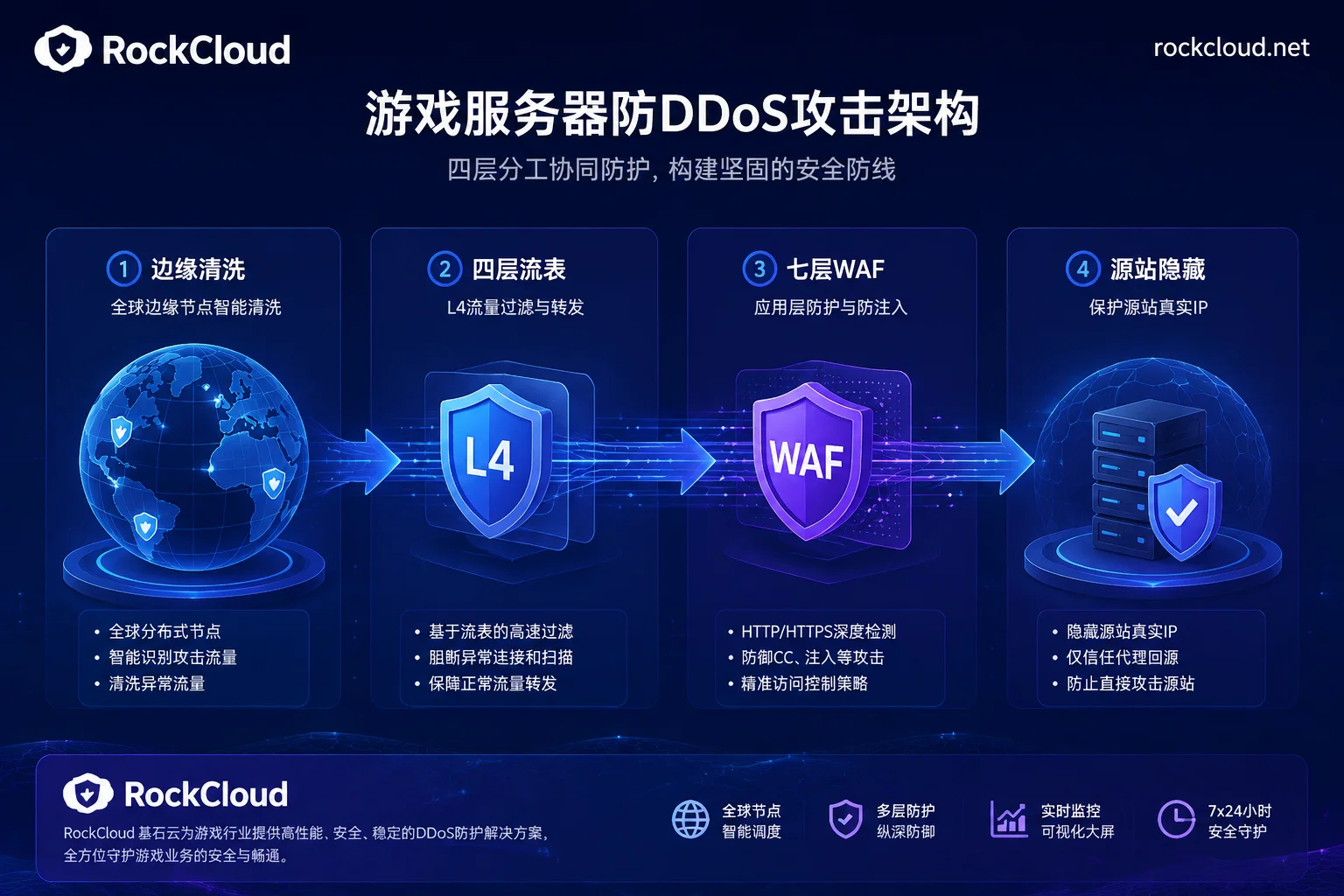
Game Server DDoS Defense Architecture: Four-Layer Division and Acceptance Criteria
When designing game server DDoS defense, first split traffic by type into four layers, then use acceptance criteria to validate each layer's effectiveness.

ACK Flood Attack Characteristics and Defense Strategies: Identification and Response
Learn to identify ACK Flood attacks by recognizing the fingerprint of low inbound bandwidth, high CPU, and RST spikes, and discover effective defense strategies using edge TCP termination and source whitelisting.

Defense Architecture Evolution and Traffic Scrubbing Practice Guide Against UDP Flood Attacks
A comprehensive guide covering the latest UDP Flood trends, attack mechanisms, layered defense strategies, and practical deployment practices with RockCloud's high-protection services.