RockCloud-基石云安全-官方博客

DDoS Emergency Response: A Fireline Self-Rescue Guide for the "10-Minute Pulse Blackhole" and Over 70% Secondary Counterattacks
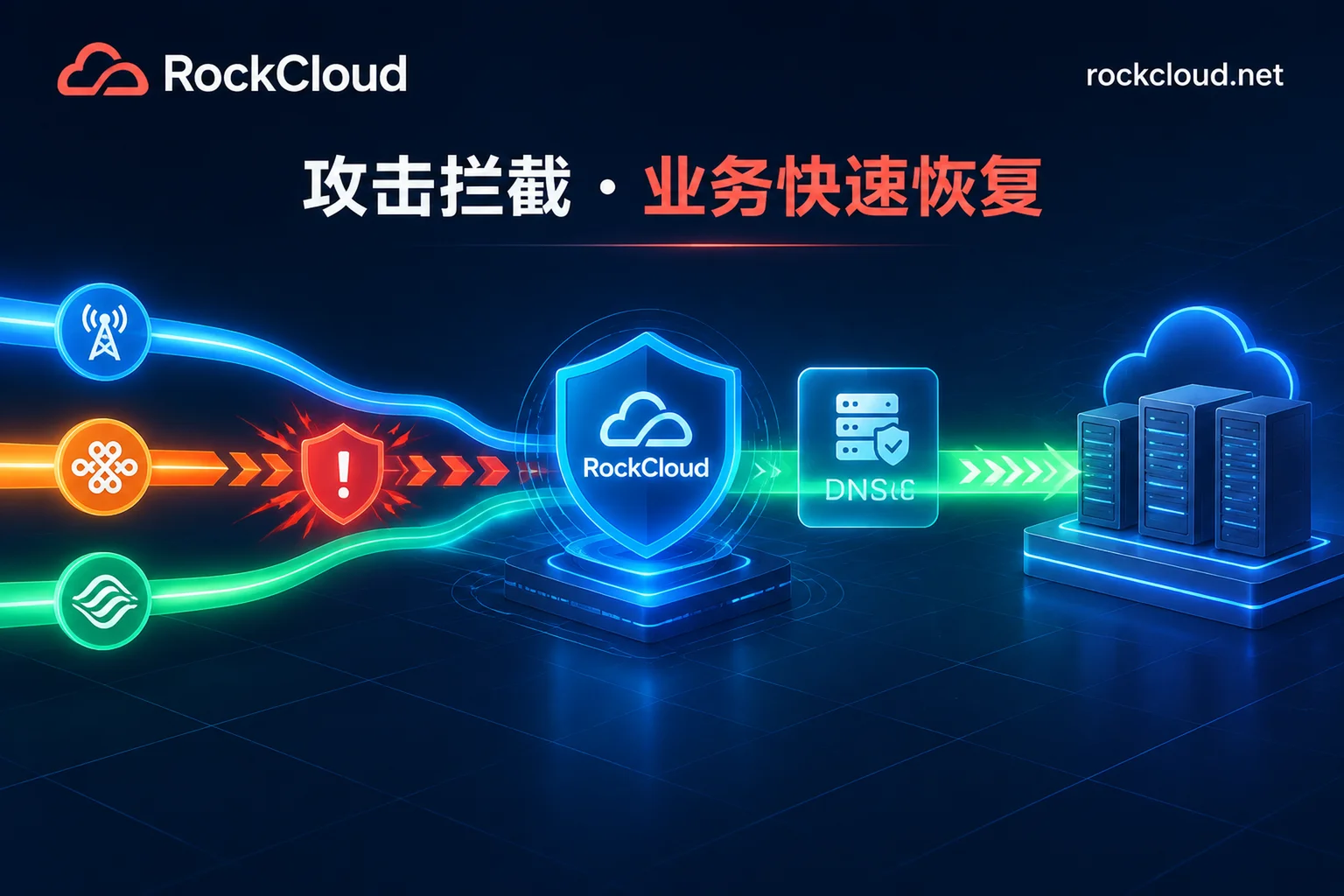
When 82% of network-layer DDoS attacks end within 10 minutes but are enough to trigger hours-long "blackhole blocking" on cloud hosts, and over 70% of victims face an average of 2.8 secondary counterattacks, traditional ticket-based troubleshooting is long obsolete. This article breaks down the fireline stop-the-bleeding SOP during an attack: how to use CNAME parallel switching without changing NS, source IP whitening and whitelist lockdown, and L3/L4/L7 same-path scrubbing to restore business in the shortest time and block subsequent连环 strikes.

DDoS Attack Incoming: Don't Let Your Business Crash While 'Waiting for Response' — RockCloud Emergency Response Manual
When your business suffers a sudden DDoS attack, every second lost means lost users and revenue. This article summarizes an emergency avoidance guide during an attack and explores how RockCloud's high-defense CDN enables 'minute-level' rapid onboarding, hiding the origin server while integrating defense and acceleration to help your business run smoothly through the storm.
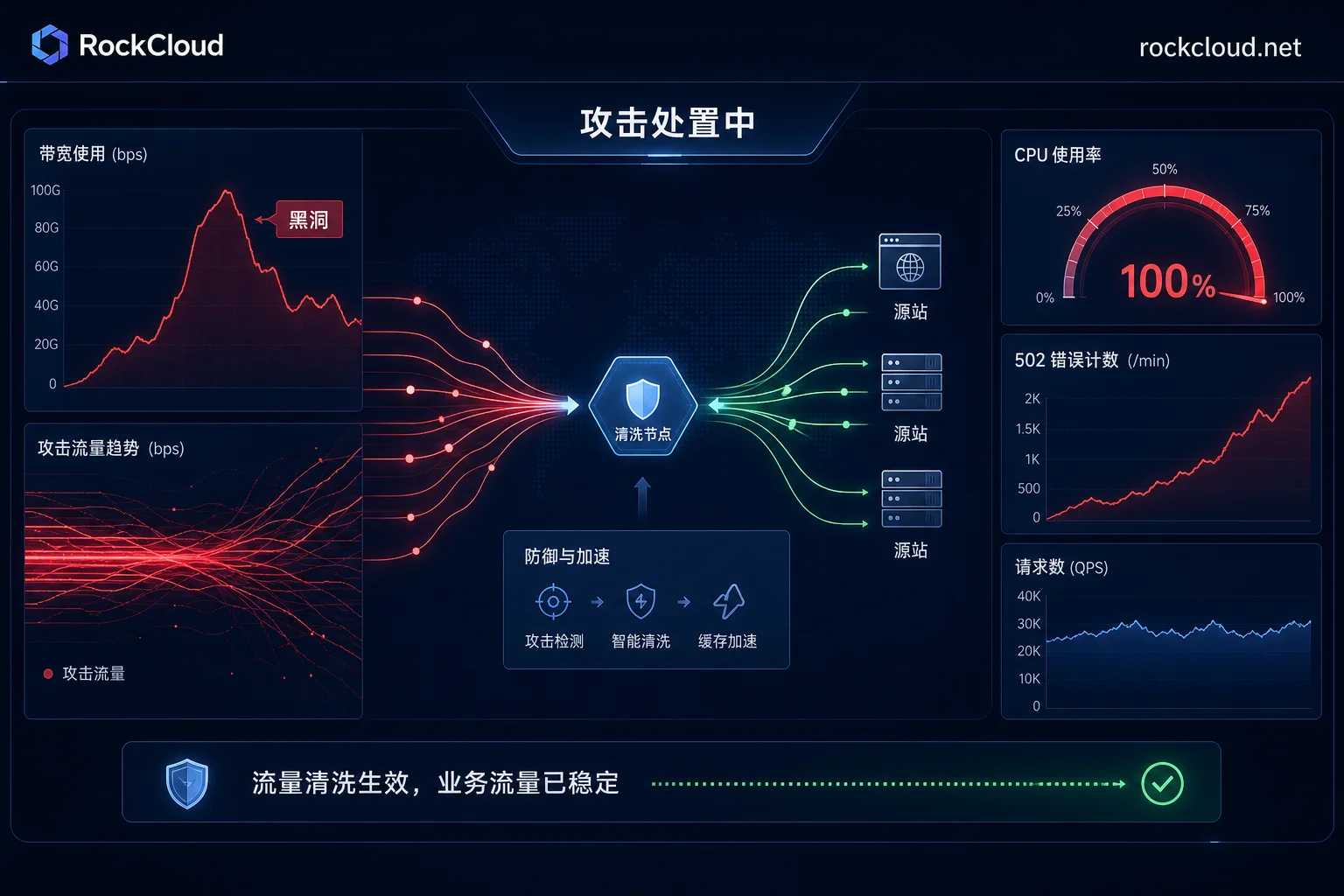
Website Under DDoS Attack? 5-Step Emergency Recovery Sequence
When a website is being hit by DDoS or CC attacks, quick recovery depends on the right sequence: first identify the attack layer, isolate the origin server (change IP if necessary), switch DNS to a mitigation node, suppress application-layer traffic at the edge, and finally clean up lingering connections.
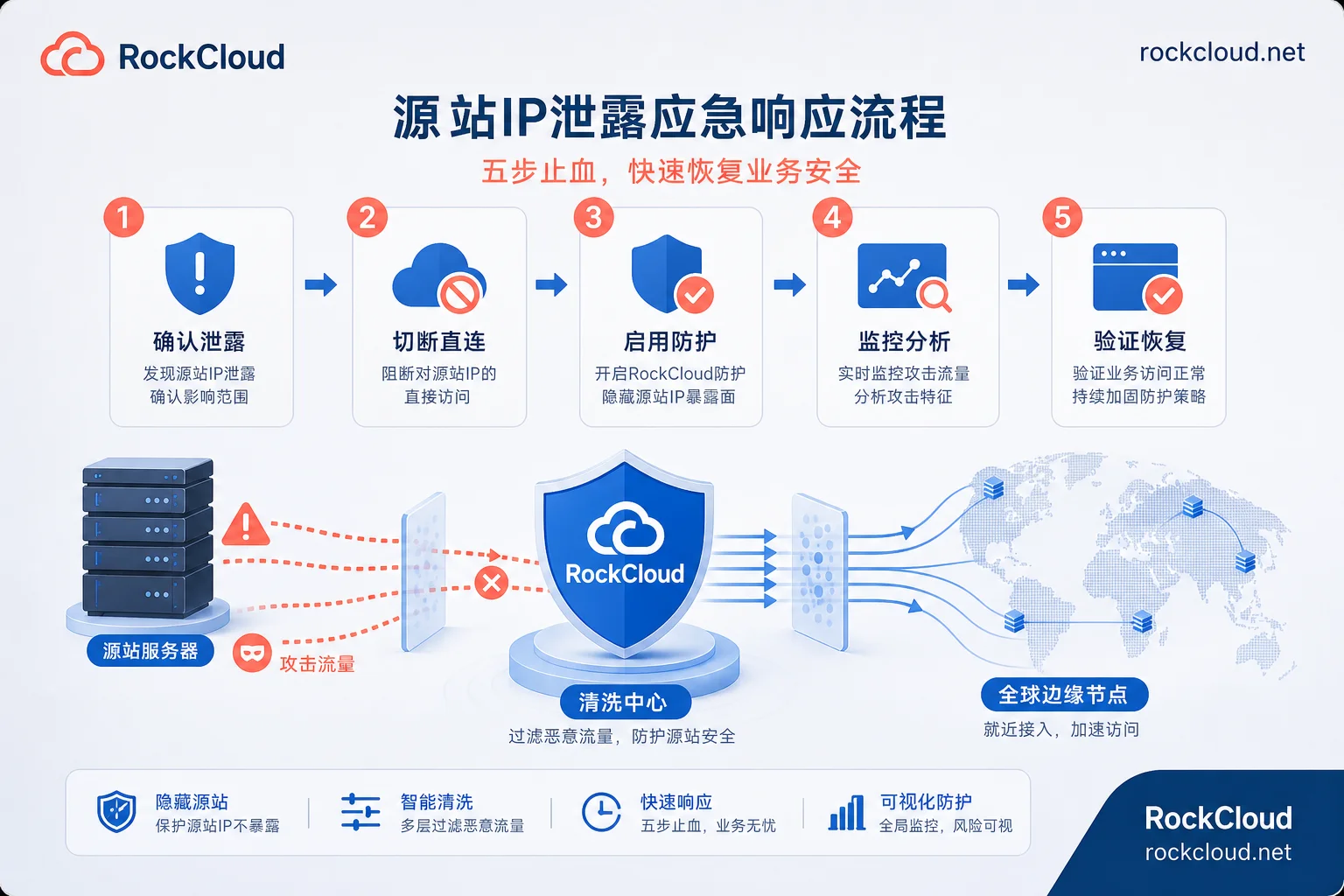
Emergency Response and Remediation Steps After Origin IP Leak: 5-Step Bleeding Control Sequence
Emergency response and remediation steps after origin IP leak: first use Step 0 to determine if the leak is real, then follow the five-step bleeding control sequence of 'containment → assessment → IP change → exposure fixation → verification'.

How to Handle DDoS Emergency Response? The Order of Operations Before and After Blackholing
A time-based 4-step DDoS emergency response playbook, covering attack confirmation, traffic diversion, blackhole handling, and post-recovery review, with practical checklists.