 RockCloud-基石云安全-官方博客
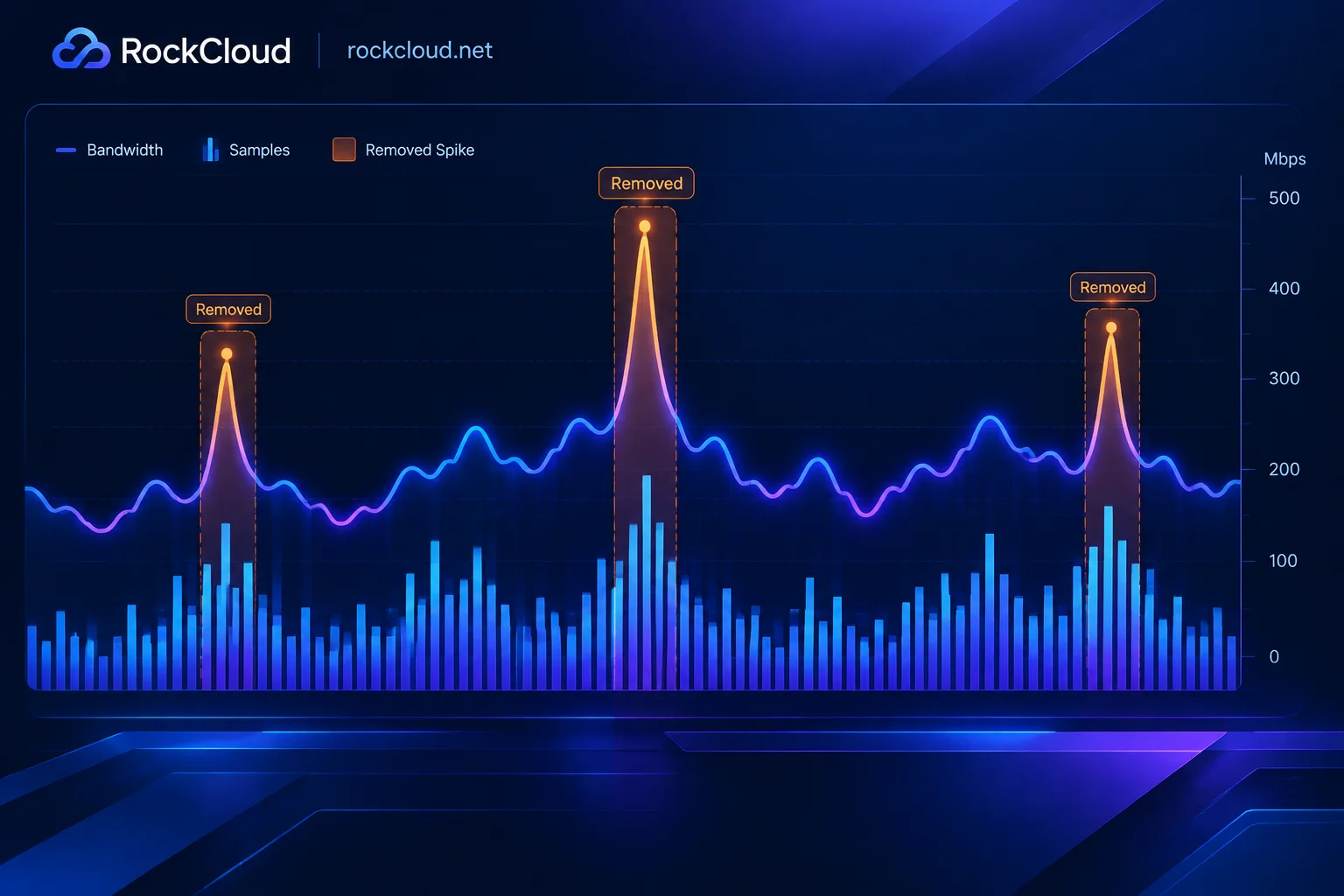
Zayo's March 2026 "2026 Cybersecurity Trends" report is a wake-up call for all teams relying on real-time communications: the median DDoS attack duration has dropped from 39 minutes to 20 minutes, nearly 90% of attacks end within 10 minutes, and the average attack size has grown by 70% to 3.6 Gbps. Attackers are no longer satisfied with traditional traffic floods; they are now combining WebSocket protocol manipulation with carpet bombing. This means the time window for manual response has almost disappeared. Most real-time long-lived connection businesses may not even react before their origin server connection pools are exhausted, causing services to collapse—this has pushed WebSocket security from an optional extra to a foundational engineering problem for real-time services.
Why has WebSocket become a blind spot in protection? It starts with the protocol itself. According to the OWASP WebSocket Security Cheat Sheet, WebSocket first establishes a connection via an HTTP Upgrade handshake, after which both parties send and receive data frames bidirectionally over a persistent channel. This "one handshake, long-term residency" model makes a series of traditional practices collectively ineffective.
Three Failure Points
- RPS-based rate limiting fails: Traditional rate limiting counts requests per second, but a WebSocket handshake counts as one "request," and after the upgrade, sending frames over time does not count as new requests. Attackers can establish many persistent connections with just a few handshakes or manipulate high-frequency data frames, causing far more stress on the origin server than surface statistics suggest.
- HTTP WAF rules fail: Most WAFs only parse HTTP request headers and bodies; after the Upgrade, data frames no longer have standard HTTP semantics, so rules naturally fail to match. The OWASP WebSocket Security Cheat Sheet and public security practices generally point out that RPS-based rules and counting rate limiting are hard to cover frame traffic after the handshake in long-connection scenarios.
- Abnormal behavior is hard to detect: Single-request features only show the handshake moment. After the connection is established, if an attacker slowly sends heartbeats, silently times out, or suddenly sends small frames at high frequency, request-level detection cannot see it, and connection-level statistics are missing, making it easy to miss.
So when someone asks, "Can a WAF defend against WebSocket attacks?" the honest answer is: it depends on whether it has protocol awareness and connection-level statistics. If it's just traditional HTTP rules, it definitely can't handle it; only with Upgrade awareness, connection-level quotas, and frame analysis can it be considered protection.
Threat Landscape Breakdown: Three Typical Risk Scenarios
Combining the Zayo report and OWASP guidance, WebSocket attacks can be categorized into three types:
- Connection pool exhaustion: Attackers use distributed or a few high-bandwidth entry points to rapidly establish a large number of real WebSocket connections, consuming every worker's connection limit, memory, and CPU. If the business doesn't set connection quotas, it can bring down the backend in minutes.
- Carpet bombing dispersal: Attack traffic is distributed across many IPs, ports, and L4/L7 layers, bypassing single-threshold alerts. The Zayo report gives an average attack size of 3.6 Gbps, and carpet bombing disperses this scale across many IPs and ports, so individual target thresholds often don't reach alert levels, causing detection delays.
- High-frequency data penetration within connections: Within an established legitimate connection, high-frequency sending of data or Ping frames neither triggers request-level rate limiting nor continuously consumes CPU and bandwidth, similar to "slow drip" but with higher intensity.
These three types are often used in combination, and relying on manual alert monitoring is not enough; defenses must be automated and moved forward.
Four-Step WebSocket Security Hardening Approach
Based on public practices, protection can be implemented at four levels, each requiring adjustment based on actual business testing.
1. Handshake Layer Authentication
- Enforce the use of wss (TLS encryption) to prevent plaintext interception.
- Validate the Origin and Host headers in requests, allowing only whitelisted sources.
- Complete Token or session authentication at the HTTP upgrade stage, rejecting unauthorized handshakes rather than "ticketing" after the connection is established.
- Directly disconnect unexpected sources and log abnormal handshake attempts.
2. Dual-Layer Quotas for Connections and Messages
The following values are only empirical reference scales; they must be calibrated based on your business's concurrency baseline, heartbeat interval, and reconnection costs.
- Connection limits: Set limits per IP, account, device, etc., e.g., max 5 connections per IP and max 2 devices per account, to prevent one person from overwhelming the system.
- Message rate limits: Set thresholds for how many messages per second per connection, each message size, and Ping/Pong frequency, and adjust dynamically.
- Total connection circuit breaker: When active connections exceed the business's estimated peak, return 503 or queue new connections.
3. In-Connection Behavior Monitoring
- Use the connection as the smallest statistical unit, recording duration, message rate, silent ratio, and heartbeat interval.
- Establish behavioral baselines, and once a connection shows abnormally fast message rates or long inactivity (but with abnormal memory usage), trigger alerts.
- Monitoring should last from establishment to destruction, continuously updating the feature library.
4. Abnormal Connection Recycling
The following values are only empirical reference scales; they must be calibrated based on your business's concurrency baseline, heartbeat interval, and reconnection costs.
- Set idle timeouts (e.g., disconnect after 90 seconds of no messages) and maximum connection lifetime (e.g., force reconnect after 24 hours) to avoid zombie connections.
- Proactively disconnect abnormal connections and implement exponential backoff reconnection to prevent immediate re-establishment.
- The recycling mechanism must align with business experience; for example, games must maintain heartbeats but can tolerate slight reconnection.
This four-step approach doesn't rely on special hardware; with proper configuration at the application and gateway layers, it can significantly narrow the WebSocket attack surface, blocking most low-cost connection exhaustion and frame floods before they reach business logic. For distributed high-volume attacks, edge-side capabilities are still needed.
Edge-Side Capability Checklist: Moving Cleaning and Validation Forward
For "WebSocket DDoS attack protection," rather than bearing the stress at the origin, it's better to block it at the edge. When selecting, at least verify the following:
- Protocol transparency: Edge nodes must correctly handle Upgrade headers and support wss to origin, without treating long connections as short polling.
- Adjustable timeouts and heartbeats: Configure idle timeouts and heartbeat probes from edge to origin to avoid killing legitimate connections.
- Connection-level statistics and quotas: Not just requests per second, but quotas based on connection count and message rate, with real-time visualization.
- Anycast distributed cleaning: Multiple nodes should share attack traffic to dilute peak. The carpet bombing mentioned in the Zayo report must be handled with global scheduling.
- Origin IP hiding: Edge nodes must fully proxy the origin IP; clients should only see the CDN IP, and direct ports on the origin should be blocked externally. If the origin IP leaks, attackers can bypass the edge and hit the origin directly, rendering all edge layers useless.
These capabilities are not necessarily available with all major cloud providers and CDN services, so careful evaluation is needed.
RockCloud's Capability Positioning in Real-Time Long-Connection Scenarios
Putting the above methodology into practice, RockCloud's public product portfolio can handle pressure at different levels:
- Anti-DDoS CDN and Anycast edge nodes: Handle distributed traffic, scrub near the edge, and support transparent WebSocket protocol transmission.
- Intelligent WAF: Perform key checks at the handshake layer, such as Origin and Token, while offering flexible rule orchestration.
- Game Shield: Specifically designed for latency-sensitive long-connection businesses, optimizing scheduling.
- Origin IP hiding: Supports configuration to hide the origin IP, cutting off direct paths.
- CN2 dedicated lines: For cross-border real-time long connections, improving access quality and stability.
Specific configurations need evaluation based on peak traffic and latency requirements; RockCloud has not publicly disclosed specific metrics like connection capacity or cleaning capacity. For discussions on implementing solutions for IM, bullet comments, market data, or AI streaming output scenarios, contact RockCloud technical support for a solution assessment.
Real-Time Business WebSocket Security Self-Checklist
Now, take 10 minutes to check your chain:
- [ ] Is wss mandatory, and are plaintext ws connections rejected?
- [ ] Are Origin and Host validated at the handshake stage, and are failures directly rejected?
- [ ] Is Token/session authentication completed at the Upgrade stage, not after the handshake?
- [ ] Are there connection limits per IP/account?
- [ ] Are there limits on message rate and frame size per connection?
- [ ] Are idle timeout and maximum connection lifetime configured?
- [ ] Are connection-level metrics (connection count, message rate, silent ratio) included in monitoring and alerts?
- [ ] Can the origin IP be directly accessed from the public internet, or is it only accessible via edge reconnection?
- [ ] Is there an automated response plan for short-duration attacks in the 20-minute range?
If any item is "No," please address it as soon as possible. None of the items in the checklist are universal thresholds; connection limits, message rates, and timeouts should be set based on your own business's normal baseline and reviewed periodically. The Zayo report's trends are clear: attacks are getting shorter and wilder, and manual response can't keep up. To preserve real-time experience, treat every layer of WebSocket security as part of everyday defense.



Comments(0)