 RockCloud-基石云安全-官方博客
In the context of enterprise digital transformation and global business expansion, Distributed Denial of Service (DDoS) attacks remain one of the primary threats to business continuity. According to the latest data from Cloudflare's "2026 Cloudflare Security Signals Report" and Radware's "2026 Global Threat Analysis Report," global DDoS attacks are exhibiting significant characteristics of "industrialization, short-duration high bursts, and multi-vector compounding." Traditional DDoS defense models that rely on manual response or single passive scrubbing are no longer sufficient to cope with the rapidly changing threat landscape.
How can enterprises accurately identify risks, restructure their protection architecture, and maintain business stability when facing traffic impacts of tens, hundreds of Gbps, or even Tbps? This article will delve into the latest threat data, break down defense breakthrough points, and provide specific architectural implementation recommendations.
1. Three Major Evolution Trends of DDoS Attacks in 2026
1. Attack Duration Extremely Short, Response Window Compressed to Seconds
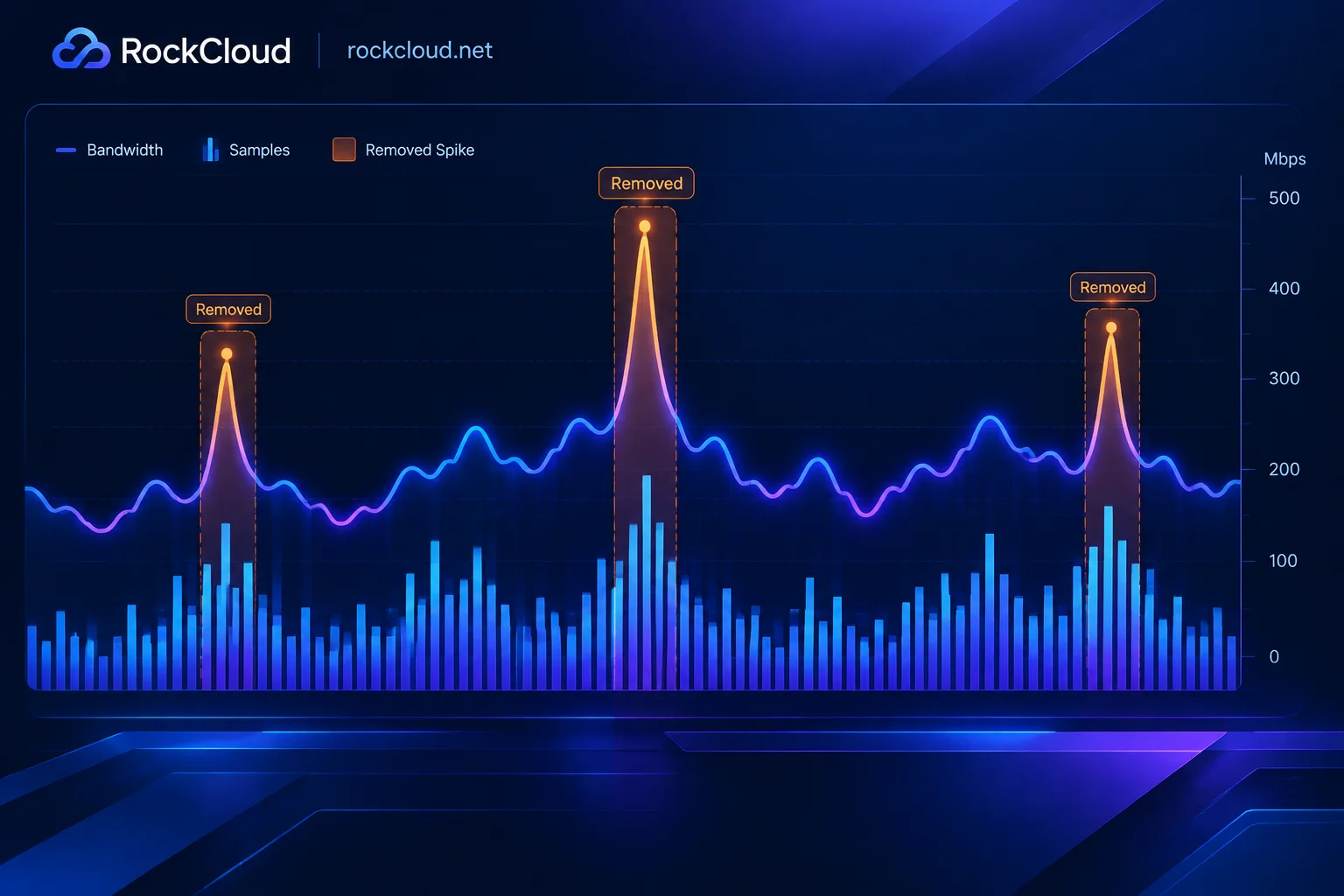
Radware data shows that today, over 89% of high-impact web DDoS attacks last less than 5 minutes, with some extreme burst attacks completing their pressure within 60 seconds. This "hit-and-run" burst attack aims to exploit the time lag in the defense system's packet capture, analysis, and rule scheduling to instantly saturate the origin server's bandwidth or exhaust server connection pools.
2. Network-Layer and Application-Layer (L3/L4 + L7) Compound Attacks Become the Norm
According to statistics from Arelion and Radware, network-layer DDoS attacks surged by over 168% year-over-year in 2026, while attacks targeting OSI Layer 7 web applications and APIs also increased by more than 100%. Attackers are no longer relying solely on traditional volumetric attacks like SYN Flood or UDP amplification. Instead, they simultaneously launch a large number of high-RPS (requests per second) HTTP/HTTPS slow requests (CC attacks) that mimic normal user behavior, making it impossible for protection devices to block them with a single threshold.
3. Automated Botnets and AI-Powered Attack Agents Lower the Barrier to Entry
The rise of new botnets like Aisuru has significantly reduced the cost of conducting massive distributed traffic attacks. Meanwhile, generative AI is being used by hackers to automatically probe business logic vulnerabilities and forge highly realistic API requests and client fingerprints, significantly increasing the difficulty for defenders to identify such attacks.
2. Why Traditional Defense Architectures Fail: Breakthrough Points from Network Layer to Application Layer
Many enterprises often encounter the dilemma that "high-protection is enabled, but the origin server is still overwhelmed" when facing DDoS attacks. The root cause lies in blind spots in the defense architecture:
- Origin Server IP Leakage and Excessive Exposure: Attackers bypass domain name resolution and directly target the origin server's public IP with direct connection attacks.
- Insufficient Scrubbing Capacity and Bandwidth Bottlenecks: The traffic scrubbing capacity of a single data center or ISP is limited, leading to upstream link congestion during extremely large traffic injections.
- Lack of Business Semantic Understanding: Ordinary traffic scrubbing only focuses on IP and packet headers, failing to identify application-layer CC attacks targeting high-consumption interfaces such as login, payment, and refresh.
As the U.S. Cybersecurity and Infrastructure Security Agency (CISA) points out in its DDoS defense guidelines, defending against modern DDoS threats requires building a layered defense system that covers business asset inventory, edge traffic scrubbing, application-layer anomaly detection, and multi-line redundancy.
3. Responding to Automated DDoS Threats: RockCloud Multi-Layer Hierarchical Defense and Application Scenarios
To address such automated and high-RPS attacks, RockCloud combines Anycast global network acceleration with distributed traffic scrubbing capabilities to provide enterprise-level users with an overall security solution that covers edge protection, origin server concealment, and intelligent routing.
RockCloud (Bedrock Cloud) publicly offers high-protection CDN, DDoS and CC protection, intelligent WAF, game shield, Anycast global network acceleration, CN2 China direct connection, caching and log services, as well as security rules and technical support for complex business scenarios.

RockCloud Practical Application Strategies for Enterprise Business
In specific business deployment, for web and API services, RockCloud's high-protection CDN and intelligent WAF can directly absorb large-scale UDP/TCP burst traffic at edge nodes while relying on intelligent rules to identify human-like CC traffic, achieving second-level scrubbing without affecting real user experience. For online gaming and financial trading scenarios that require extremely high real-time performance and unique communication protocols, combining the game shield and CN2 China direct connection not only completely conceals the origin server address but also achieves a balance between anti-blocking, low-latency transmission, and high-concurrency scrubbing.
4. Enterprise DDoS Defense Implementation Guide and Emergency Checklist
Facing potential or imminent DDoS attacks, operations and security teams can use the following checklist for daily hardening and emergency response:
| Defense Phase | Core Tasks | Actionable Steps |
|---|---|---|
| Prevention | Asset concealment and capacity planning | 1. Integrate high-protection CDN or Anycast scrubbing network to hide the origin server's real IP 2. Set rate limiting and verification code mechanisms for high-consumption API endpoints 3. Collect access logs and establish a baseline for normal business traffic |
| Response | Rapid interception and rule tuning | 1. Monitor bandwidth and RPS anomalies to confirm attack type (L3/L4 traffic-based or L7 logic-based) 2. Enable intelligent WAF interactive verification and custom JS challenges 3. Block known malicious ASNs, geographic locations, or malicious bot fingerprints |
| Post-review | Strategy iteration and drills | 1. Analyze attack logs to summarize attacker characteristics and attack peaks 2. Optimize scrubbing rules to reduce the time delay from attack identification to effect |
For enterprises evaluating security protection upgrades, it is recommended to assess their comprehensive needs for latency, scrubbing capacity, and application-layer protection. Facing increasingly industrialized DDoS attacks, RockCloud provides systematic security protection and technical support covering high-protection CDN, game shield, and CN2 China direct connection, helping enterprises build cloud infrastructure platforms that combine high availability and robust security.



Comments(0)