 RockCloud-基石云安全-官方博客
Many assume that when a Tbps-scale DDoS hits, the scrubbing equipment fails first. In reality, for a single data center solution, the first point of failure is often the inbound physical link. The core of an architecture designed for Tbps-scale DDoS attacks is to distribute traffic across multiple edge nodes for local absorption, rather than relying on a single point's bandwidth to withstand the load. In the first half of 2026, Cloudflare reported that attacks above 1 Tbps surged by 519% quarter-over-quarter, with 935 automatically mitigated in the first half. At this scale, the approach of centralized protection in a single data center needs rethinking.
Identify the Break Point First: When a Tbps Attack Hits, Does the Uplink or Scrubbing Equipment Fail First?
When attack traffic exceeds the data center's total upstream bandwidth, the link saturates first, and scrubbing equipment becomes effectively "choked" before it can process the traffic. The Cloudflare H1 2026 report noted that 1 Tbps+ attacks increased 519% QoQ in Q2, totaling 935 in H1. This means a single data center's physical bandwidth ceiling is far below the attack peak; traffic doesn't even reach scrubbing nodes before the link is congested. Therefore, an architecture to handle Tbps-scale DDoS must place inbound capacity at multiple edge locations, dispersing traffic at its source.
Responsibility Segment 1: Inbound Capacity Offload—Why Volumetric Attacks Must Be Absorbed at Edge Locations
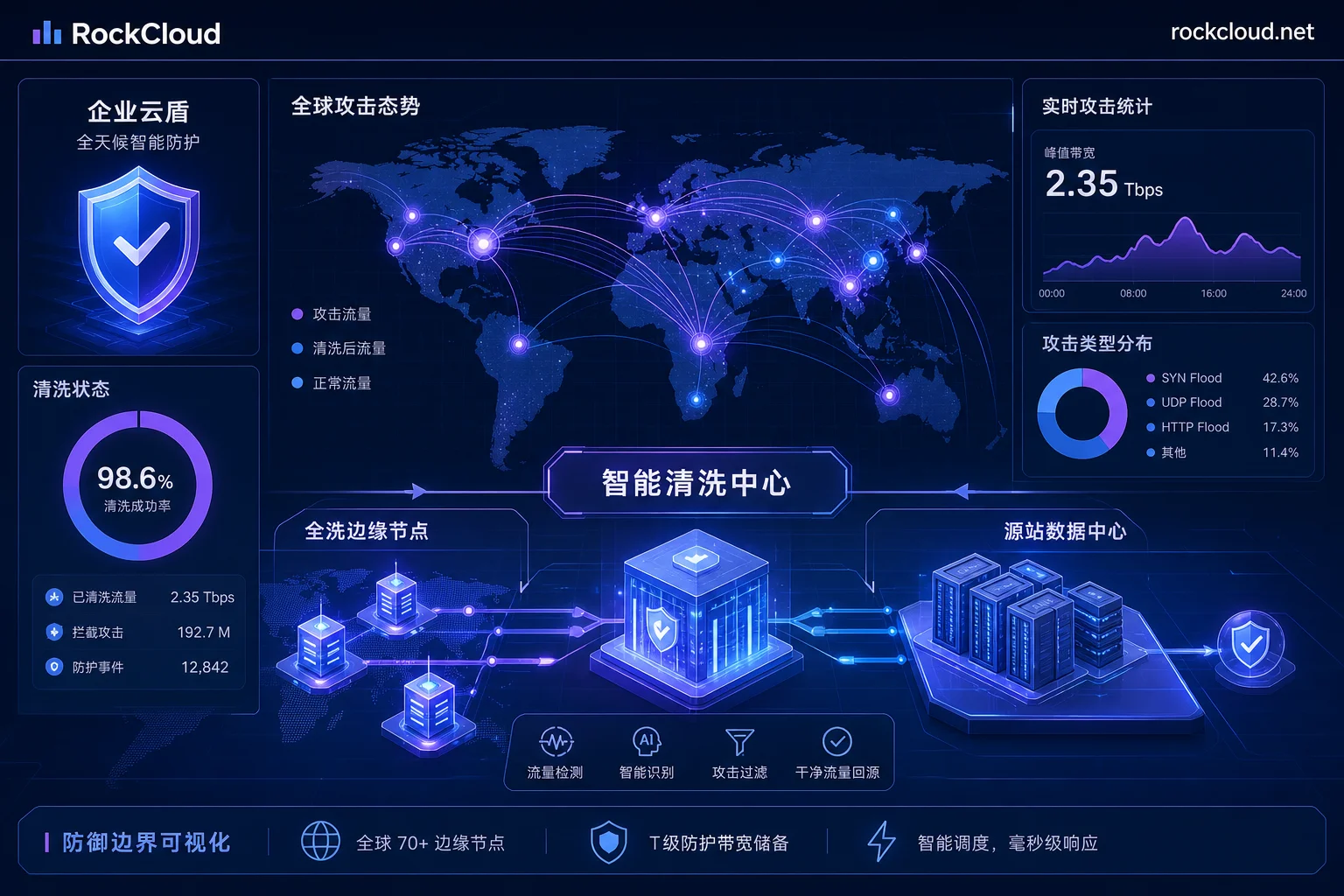
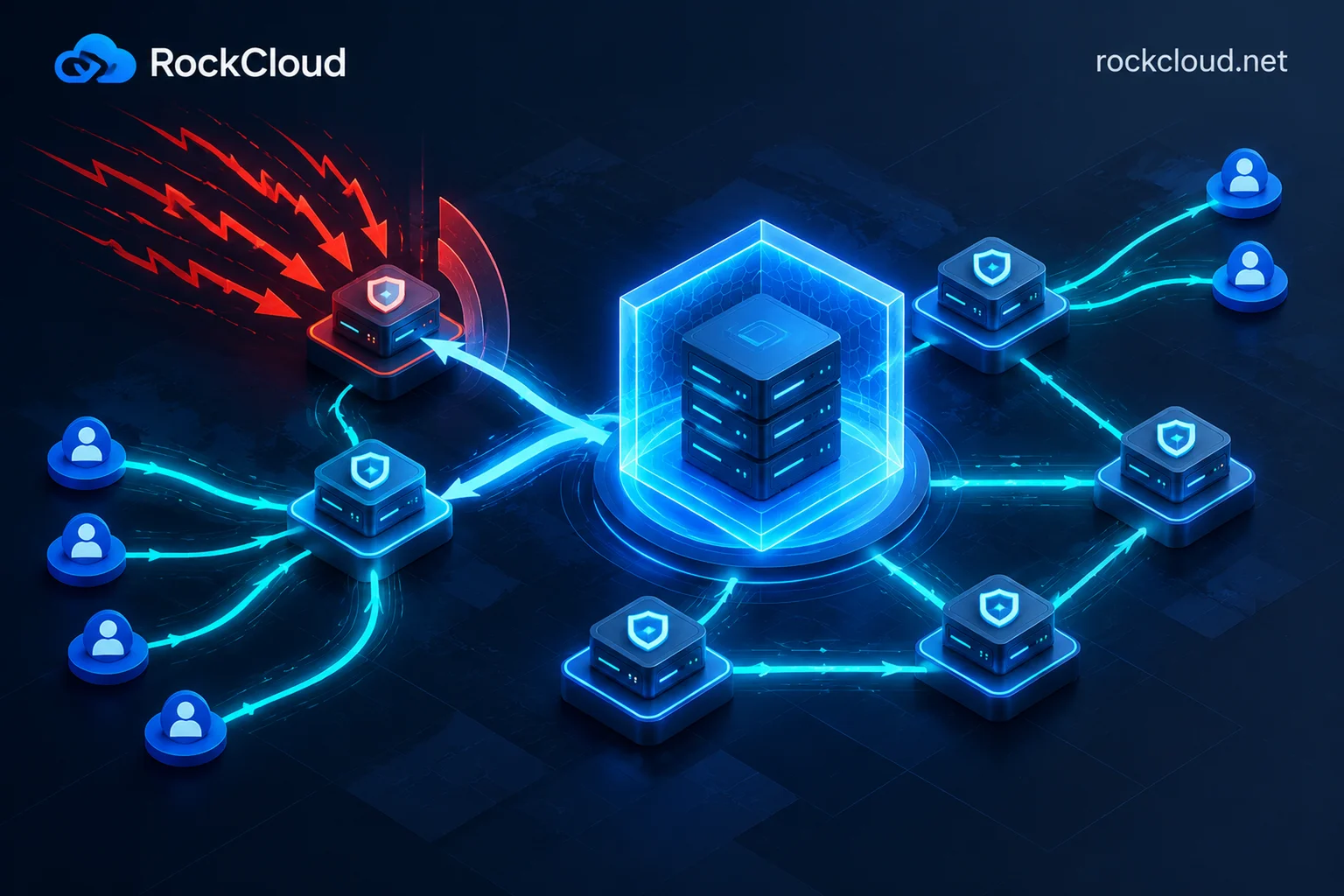
Volumetric attacks are fundamentally about bandwidth, not compute. By geographically dispersing traffic across multiple global edge points of presence based on source, each node only processes a small local share, reducing single-point pressure to a manageable level. This is achieved through Anycast front-end access, where multiple nodes share the same IP, and attack traffic is routed to the nearest edge node. AWS best practices also emphasize front-end termination via globally distributed edge Anycast nodes, which is central to edge offload. For technical details, refer to BGP Anycast in DDoS Scrubbing.
Responsibility Segment 2: Vector Identification—Local Drop Criteria for Reflection Amplification Traffic Such as DNS and CLDAP
Reflection amplification traffic has strong features: source port, packet size, and lack of request context. For instance, DNS-related attacks account for 34.3% of network-layer attacks, and DNS floods rose from 25.7% to 40% in a single quarter, while CLDAP floods surged 580% QoQ. Such traffic should be dropped locally at edge nodes closest to the attack source, rather than being relayed to a centralized scrubbing center; otherwise, it would consume backbone links a second time. Edge nodes use stateless filtering to identify and discard these reflection packets, reducing backbone pressure.
Responsibility Segment 3: L7 Detection and Origin Shielding—What Each Solves in Tbps Scenarios
After passing the volumetric layer, there remains low-rate application-layer abuse that requires L7 detection (WAF, rate limiting). Origin shielding prevents attackers from bypassing protections to hit the real IP directly. AWS best practices recommend strict security groups and origin source allowlists, prohibiting direct connections from non-edge source IPs. These two responsibilities cannot replace capacity offload, nor can they be replaced by it. For source hardening, see How to Prevent Origin IP Exposure.
Three Break Points in Single Data Center DDoS Mitigation: Nominal Bandwidth, Blackholing Policy, and Control Ownership
The phrase "500G single-data-center protection is sufficient" is common, but it has three break points: first, the nominal defense value often refers to scrubbing capacity, not usable uplink bandwidth; second, blackholing is triggered by upstream ISPs based on port thresholds, so control is not in the data center's hands; third, a single ingress can be saturated in seconds under reflection pulses. At 2026 attack scales, this approach is inherently inadequate.
Why Peak Numbers Alone Should Not Guide Selection: Architectural Implications of Compressed Attack Durations
Radware's 2026 report shows network-layer attacks increased 168.2% year-over-year, with most record-level peak attacks lasting under five minutes or even 60 seconds. This means manual graph inspection, temporary DNS switching, or ticket-based scaling is ineffective against Tbps-scale pulses. Selection should focus on automated mitigation paths and sustained capacity, not the peak numbers on a quote.
Comparison Table: Six Dimensions of Difference Between Single Data Center vs. Multi-Region Edge Offload
| Dimension | Single Data Center | Multi-Region Edge Offload |
|---|---|---|
| Inbound capacity ceiling | Limited by single DC bandwidth | Sum of multiple edge nodes |
| Reflection traffic drop location | Central scrubbing center | Local drop at edge nodes |
| Blackholing risk | High, triggered by upstream based on port | Low, traffic distributed |
| Control ownership | ISP | Provider or self |
| Activation latency | Seconds to minutes | Milliseconds, automated |
| Origin exposure surface | High, easy to bypass | Low, tightened source allowlists |
RockCloud's Role in Edge Offload and Origin Shielding
RockCloud's Anycast global network handles inbound distributed capacity; its high-defense CDN and traffic scrubbing drop reflection traffic locally at the edge; WAF and origin protection handle L7 detection and origin shielding. It addresses the responsibility placement, not a specific defense peak. When configuring, pay attention to source allowlists and blocking non-edge origin connections. For emergency response, refer to DDoS Emergency Response.
Architecture Self-Check Checklist: Five Questions to Ask Before Signing
- Does the nominal defense value refer to scrubbing capacity or available uplink bandwidth?
- At which hop is attack traffic dropped?
- What are the blackholing trigger rules and notification mechanisms?
- What is the activation latency of scrubbing policies, and is manual confirmation required?
- How are source allowlists and non-edge origin block verification handled?
FAQ
Can a single data center handle 1 Tbps DDoS attacks?
Single data center uplinks typically cannot achieve 1 Tbps, Even if the scrubbing equipment can handle it, the link will saturate first and trigger blackholing. So it cannot withstand; you must use multi-region edge offload to distribute traffic.
Is blackholing due to insufficient scrubbing capacity or bandwidth?
Usually it's bandwidth. Blackholing is triggered by ISPs when port traffic exceeds thresholds. No matter how powerful the scrubbing equipment, if inbound traffic saturates the link, you'll get blackholed, and control is not in your hands.
Is 500G DDoS protection sufficient?
If your business might face Tbps-scale attacks, 500G is not enough. The nominal 500G might only refer to scrubbing capacity, not uplink bandwidth. With the surge in Tbps-scale attacks in 2026, assess actual uplink capacity and consider edge offload solutions.
How to layer offload for massive traffic attacks?
Layered offload consists of four segments: inbound link capacity via multi-region edge Anycast; vector identification drops reflection traffic locally at the edge; L7 detection handles application-layer abuse; origin shielding prevents real IP exposure. Each layer has distinct responsibilities; all are essential.
Which is more effective against large traffic: Anycast or a central scrubbing center?
Anycast is more effective. A central scrubbing center is limited by single-point bandwidth, while Anycast distributes traffic across multiple global nodes. Each node handles only a small portion, and total capacity scales with the number of nodes, making it more adaptable to Tbps attacks.
How much bandwidth is needed for Tbps DDoS defense?
Don't focus on total bandwidth numbers alone; look at effective capacity. The key is to distribute traffic across multiple edge nodes so each node's traffic stays far below its bandwidth ceiling, while ensuring automated scrubbing and rapid activation—not chasing a single number.


Comments(0)