 RockCloud-基石云安全-官方博客
High-Protection IP vs High-Protection Server: Cost and Effectiveness Comparison — Bottom line: If your business can change its traffic entry point and experiences bursty attacks, prioritize an "existing server + front-end high-protection IP" approach. If your IP must remain static and you require low-latency direct connections, stick with a high-protection server. By 2026, DDoS attacks have evolved to feature "short bursts, high frequency, and suddenness." According to public threat reports, over 90% of network-layer attacks last less than 10 minutes (this figure is from a third-party annual report and may vary across sources). Traditional monthly billing based on peak bandwidth is wasting budgets on idle capacity while exposing businesses to blackhole risks when bursts exceed thresholds. Below, we break down the true costs and effects of both approaches with four accountable calculations.
First, distinguish the two forms: defense integrated into the machine vs. attached to the traffic entry point
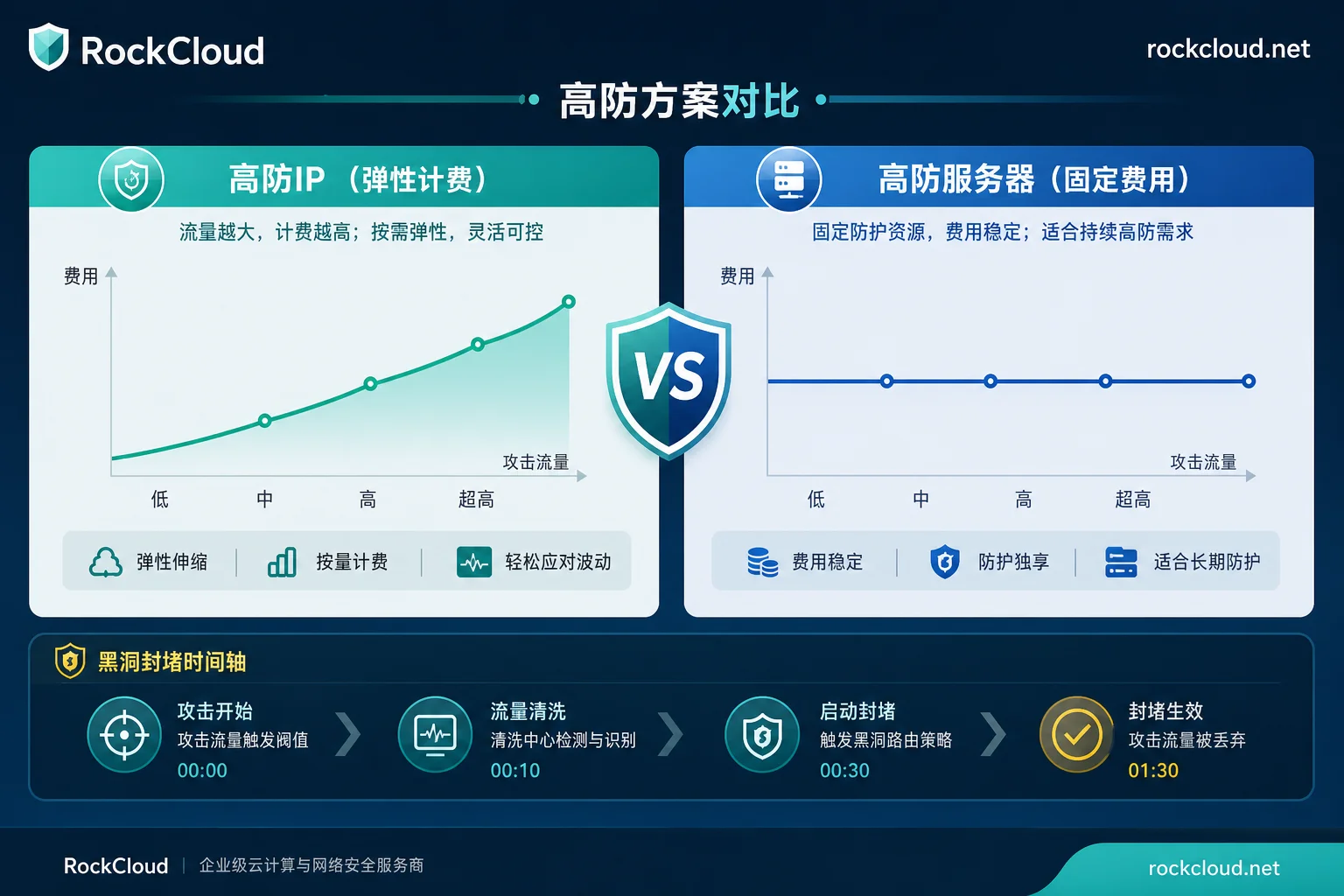
A high-protection server binds DDoS defense capabilities directly to a single host's public IP. Attack traffic hits this machine first, is cleaned by the data center, and then enters your business. The source IP is the business IP, with no additional forwarding required.
A high-protection IP, on the other hand, is a separate protected IP that sits at the traffic entry point via reverse proxy and port forwarding. The source server's real IP is hidden from the outside. Attacks are diverted to the high-protection IP for cleaning, and clean traffic is then forwarded back to your business server. This structural difference determines the billing and failure radius for the next four calculations.
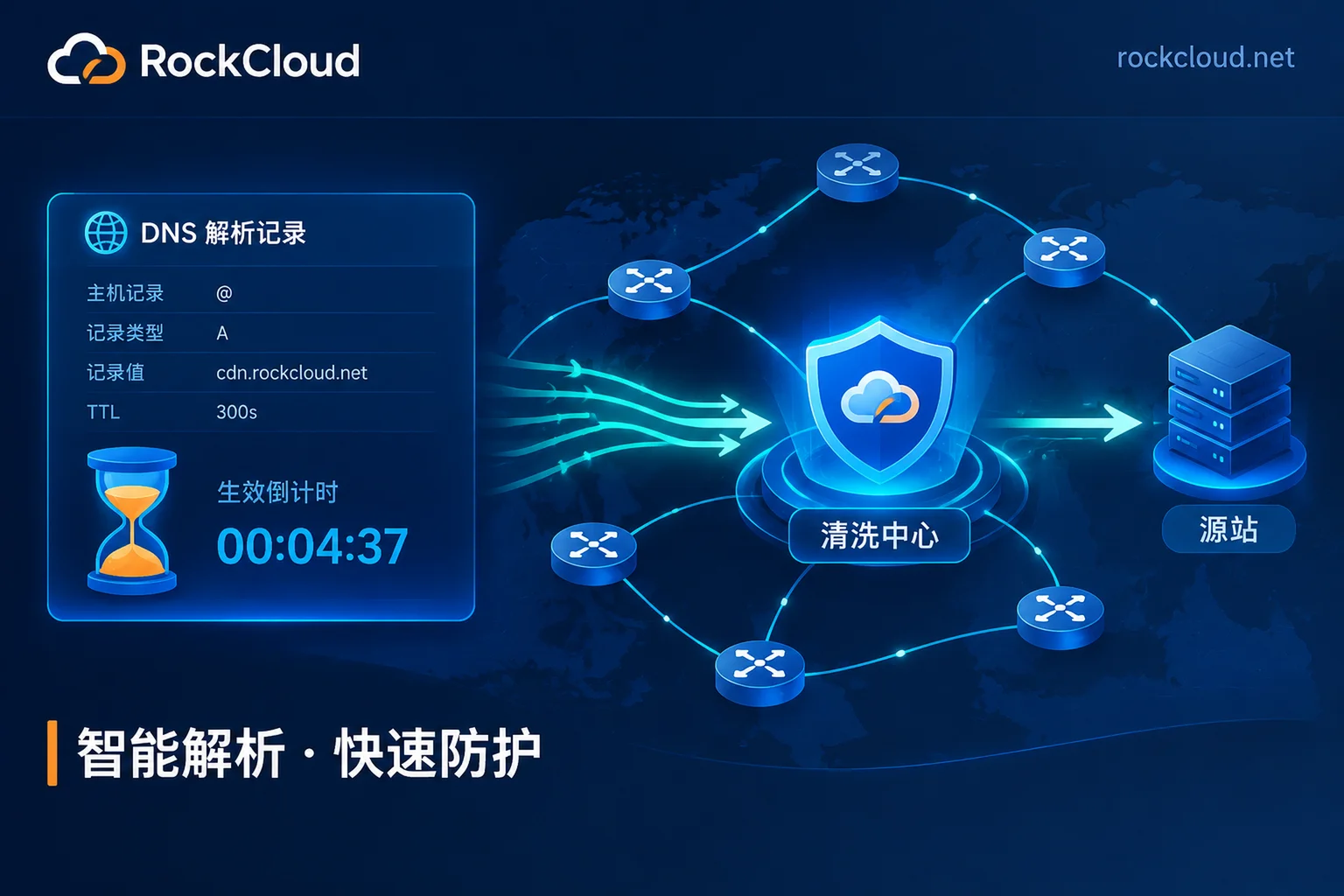
Can you add a high-protection IP to an existing server? Yes, as long as your business can accept a change in traffic entry point—simply resolve your domain or port to the high-protection IP and configure the origin rules. No need to repurchase hardware.
First Calculation: Billing Model — Base Prepaid + Elastic Daily Billing vs. Fixed Monthly
Public cloud high-protection IPs typically adopt a billing architecture of "base protected bandwidth (monthly/yearly prepaid) + elastic protected bandwidth (daily postpaid)" (per Alibaba Cloud's official documentation, July 2026). When inbound attack traffic exceeds the base spec but stays within the elastic limit, the system charges daily based on the highest attack peak of the day, according to a tiered rate. If the base spec is not exceeded or no attack occurs, no elastic charges incur. If traffic exceeds the elastic upper limit, the asset triggers blackholing.
One crucial spec difference to clarify upfront: Analysis of Isolated vs. Shared High-Protection IP Differences. The former has dedicated protection resources; the latter shares among multiple tenants, affecting billing and isolation levels, which directly determines your base and elastic configuration.
Key fields on the quote you must scrutinize:
- Base protected bandwidth spec
- Elastic protected bandwidth upper limit
- Settlement method (daily peak tiered)
- Whether origin bandwidth is billed separately
Is daily billing cheaper than monthly for high-protection IP? The answer depends on your attack distribution: bursty attacks favor "low base + elastic daily billing," while continuous high-volume traffic may be cheaper with monthly billing. You must calculate based on your actual attack patterns—don't guess.
How much does exceeding the elastic limit cost? Mechanically, you're billed only for the portion above the base, based on peak tier, but the exact unit price requires a written quote from the provider, and you must confirm the elastic upper limit. If the limit isn't specified, exceeding it triggers blackholing, and business interruption costs usually far exceed the protection fee itself.
Second Calculation: One-Time Migration and Refactoring Costs
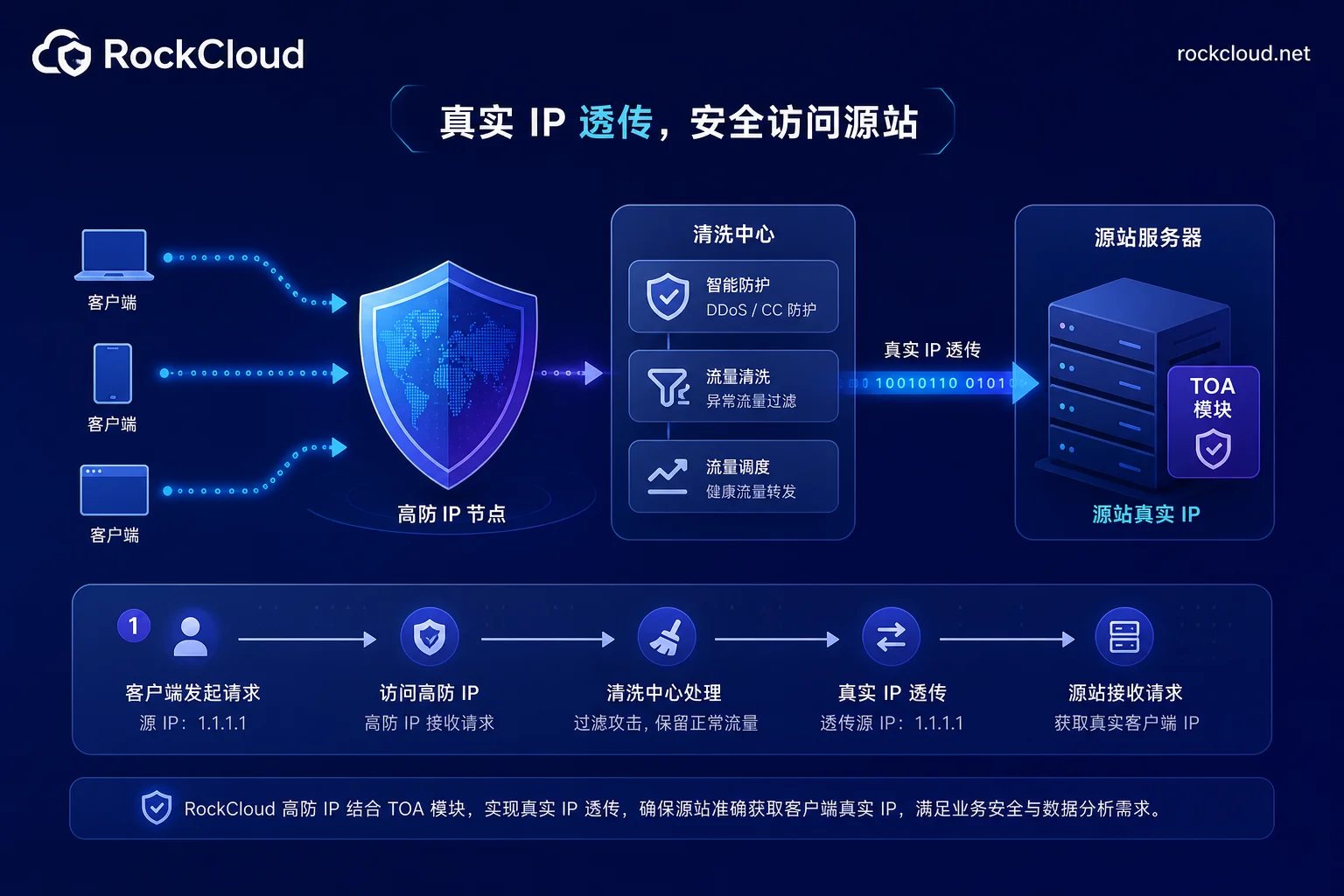
Integrating a high-protection IP isn't "plug and play." It requires refactoring effort: mapping port forwarding rules and confirming rule quotas, evaluating origin bandwidth, and addressing source IP passthrough for TCP-based scenarios.
For TCP layer 4, for example: the source server receives packets with the source IP set to the high-protection data center's origin IP. To get the real client IP, you must compile and install the TOA (TCP Option Address) module in the server's kernel, or parse the source address from TCP Option fields (per Huawei Cloud's official documentation, August 2026). This is nearly mandatory for non-HTTP business like games and proprietary protocols. Ops teams need kernel compilation skills; otherwise, logs will show high-protection data center IPs, skewing risk control and analytics. To lower the refactoring barrier, check out Seamless Integration with High-Protection CDN Configuration Process.
High-protection servers, on the other hand, require no architecture changes, but switching machines means switching IPs, which incurs migration and IP change costs. What if you have insufficient forwarding ports on a high-protection IP? Quotas are set by the provider; confirm the port number limits in writing before signing. If insufficient, you either upgrade the quota or adjust forwarding strategies—this is negotiable, but don't assume it's unlimited.
Third Calculation: Unavailability Cost During Attacks — Blackhole Scope, Unblock Time, and Disposal Rights
This is the core calculation in comparing high-protection IP vs. high-protection server costs and effects. When attack traffic exceeds the data center's preset blackhole threshold, the cloud provider executes traffic discard at the carrier level, i.e., blackholing. The default blackhole duration typically ranges from 2 hours to several hours. Moreover, cloud platforms strictly limit the number of self-service unblock operations per account per day (usually 3-5 times) and impose intervals between unblock attempts (per Alibaba Cloud's official documentation, July 2026).
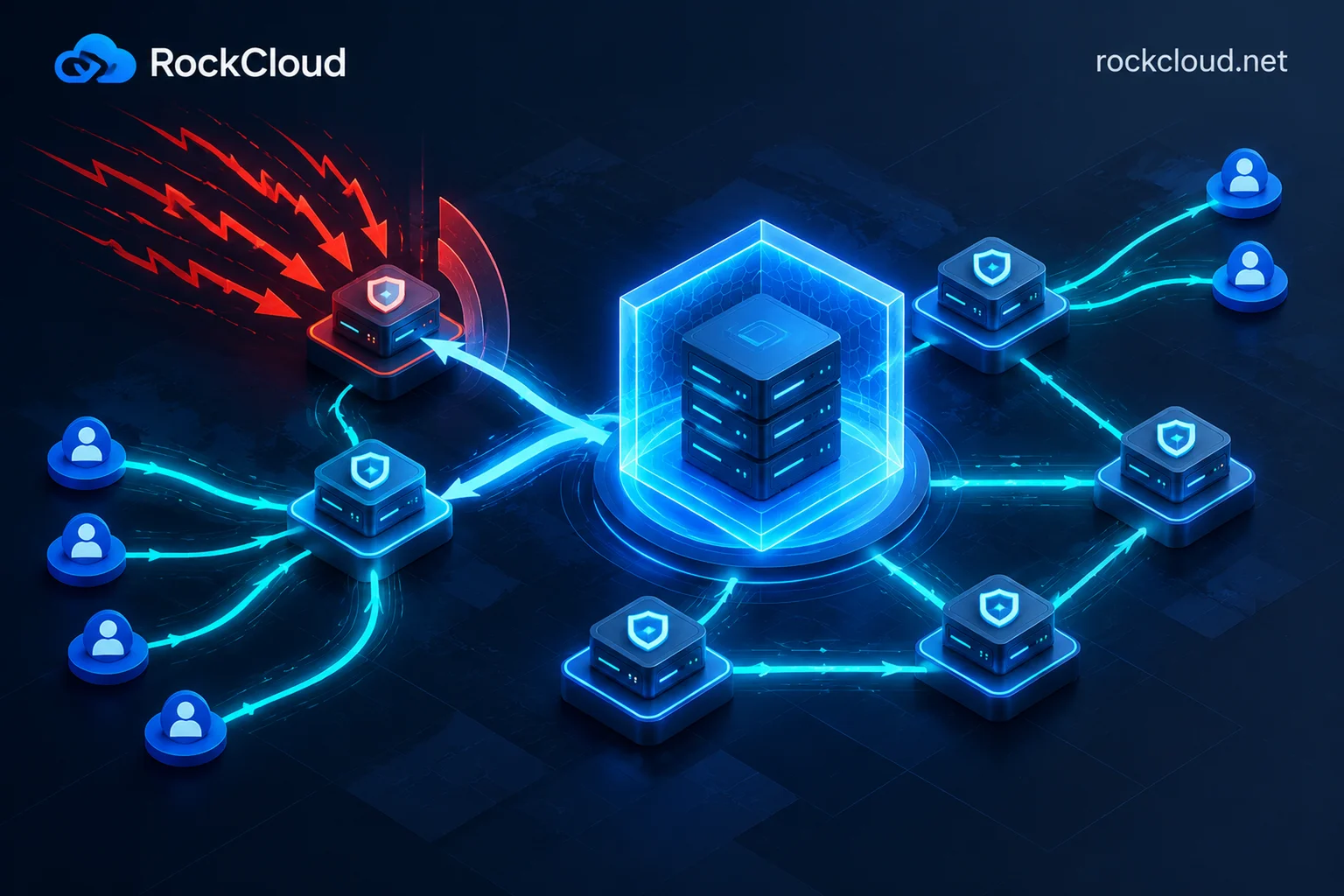
Compare the failure radius of the two forms: With a high-protection server, blackholing takes down the entire underlying IP, making the business IP unreachable, and unblocking is subject to daily limits. With a high-protection IP, the source IP is hidden, and blackholing occurs at the entry point. As long as the origin link is normal, the business server is unaffected, and you have more flexibility—you can switch to a new high-protection IP for traffic diversion without waiting for the entire machine to unblock. How to Prevent Source Real IP Exposure is a key operational action in this form.
Do you still pay if a high-protection server is blackholed? The source documents only explain the trigger conditions, duration, and unblock limits; they don't address billing during blackholing. Whether monthly charges continue, or if you get extensions or partial compensation, is a contract matter—you must confirm in writing with the provider. So, don't blindly trust claims like "100% no blackhole with our high-protection server." When attack traffic exceeds the tolerance of IDC or carrier backbone, blackhole routing is an inevitable protective action—no form can absolutely avoid it.
Fourth Calculation: Scaling and Sunk Costs After Business Growth
With high-protection servers, upgrading specs often involves swapping machines, changing IPs, and re-migrating. The cost you paid for peak capacity becomes sunk—your defense bandwidth may never be fully utilized, but the money is spent.
On the high-protection IP side, adjusting base and elastic limits is relatively independent of the business machine. You can raise the protection level without changing the origin server, but you need to re-evaluate origin bandwidth and forwarding rule quotas to avoid upgrading entry protection while the origin link becomes a bottleneck.
Pre-scaling checklist: Is the current base and elastic limit aligned with your growth curve? Is origin bandwidth peak sufficient? Do forwarding rules cover new ports? Does the TOA module need recompilation after kernel upgrades? Are daily unblock attempts enough for sudden incidents?
Why the Old "Buy Peak Bandwidth Monthly" Calculation Is Wrong Today
In 2026, the attack pattern is short bursts: over 90% of network-layer attacks are compressed into 10 minutes or even tens of seconds, with high frequency and suddenness (per public threat reports). The traditional strategy of "buy top-tier large-bandwidth monthly high-protection server" incurs high fixed costs and idle capacity. If you buy lower specs due to budget, bursts exceeding thresholds trigger blackholing, limited by daily unblock attempts.
The cost center has shifted from "normal bandwidth" to "burst absorption capacity and disposal rights." The "base + elastic daily billing" mechanism of high-protection IP inherently spends money where it matters: low base saves on normal days, and elastic absorbs bursts. In contrast, fixed monthly billing for high-protection servers is either wasteful or insufficient under short bursts—a lose-lose situation.
Quick Comparison Table and Red Flags
Condense the high-protection IP vs. high-protection server cost and effect comparison into a table for immediate judgment across four dimensions:
| Dimension | High-Protection IP | High-Protection Server |
|---|---|---|
| Billing Model | Base prepaid + elastic daily postpaid | Fixed monthly, idle during normal times |
| Migration/Refactoring Cost | Port forwarding, origin bandwidth, TOA module | Machine swap, IP change, migration |
| Blackhole Failure Radius | Source IP hidden, blackhole at entry | Entire machine IP blocked, affects business |
| Scaling Path | Adjust base/elastic, independent of business machine | Machine swap, IP change, high sunk cost |
Red flags before signing: Refusal to provide written specifics on elastic limits and settlement methods; not specifying blackhole duration and daily unblock limits; lacking forwarding rule quotas and TOA support details; promising "infinite defense, 100% no blackhole." If you see these, go elsewhere.
Conclusions by Business Type: Websites/APIs, Game Proprietary Protocols, Single-Region Intranet Direct Connection
- Layer 7 websites and APIs: Lowest cost to change entry point; just switch DNS resolution. Prioritize high-protection IP with elastic billing to absorb burst attacks.
- Game proprietary layer 4 protocols: Weigh forwarding rule quotas, origin bandwidth, and TOA refactoring. Total cost of ownership may not necessarily be lower than a single high-protection server. If you have many port rules and the team isn't familiar with kernel-level work, a high-protection server might be simpler. Game Server DDoS Protection Architecture Design can offer further reference.
- Single-region intranet direct connection with fixed IP: Such as internal systems or fixed IP integrations, favor native high-protection forms to avoid the complexity and performance overhead of forwarding and passthrough modifications.
This isn't a one-sided conclusion. The high-protection IP vs. server cost and effect comparison only holds after you calculate all four dimensions with your actual business parameters.
RockCloud's Position in Edge Delivery and Billing Models
RockCloud publicly offers high-protection CDN, DDoS and CC defense, intelligent WAF, game shield, etc. These fall under the "defense at the traffic entry point" model—attacks are cleaned at edge nodes, and the origin is hidden. In the four calculations, this aligns with the high-protection IP model: you must confirm base and elastic billing terms, how elastic overage is defined, and who owns blackhole disposal rights—all should be in the contract, not verbal promises. The exact positioning still depends on the contract's specified base and elastic terms, and blackhole disposal rights. To evaluate whether edge cleaning suits your business, contact RockCloud support for architecture validation advice.
FAQ
Which is more cost-effective: high-protection server or high-protection IP?
It depends on attack patterns. For bursty attacks, the elastic daily billing of high-protection IP saves money on normal days; for sustained high-volume attacks, fixed monthly billing of high-protection servers may be cheaper. You need to calculate both against your normal traffic and attack history using the four calculations.
Is daily or monthly billing cheaper for high-protection IP?
There's no fixed answer. Daily billing suits scenarios with low attack frequency but high peaks; monthly suits continuous high traffic. The key is to understand base and elastic limits to avoid blackholing. Ask providers to simulate quotes based on your attack curve.
How much does exceeding the elastic limit cost?
Mechanically, only the portion above the base is billed, based on daily peak tiers, but the exact amount depends on the provider's quote. The main concern isn't the unit price but confirming the elastic upper limit; exceeding it triggers blackholing, and business interruption costs far exceed the protection fee.
Can I add a high-protection IP to an existing server?
Yes. As long as you can accept changing the traffic entry point—resolve your domain or port to the high-protection IP and configure origin rules. But for layer 4 protocols, consider TOA module refactoring and whether port forwarding quotas suffice.
Do I still pay if a high-protection server is blackholed?
Public documents don't provide a uniform rule; it depends on the contract. More importantly, focus on unblock duration and daily unblock limits.
What if forwarding port quotas on high-protection IP are insufficient?
First, confirm the provider's quota limit. Then assess whether you can merge ports or use layer 7 forwarding. If you have many ports, consider upgrading the quota or switching to a high-protection server. Always confirm quotas in writing before signing to avoid being stuck later.
Do I need a high-protection server for small attacks?
If small attacks don't hit the blackhole threshold, the fixed monthly cost of a high-protection server with idle defense bandwidth is poor value. First, check your existing machine's basic defense threshold and the data center's blackhole threshold. Then decide whether to add a low-base high-protection IP, avoiding sunk costs from paying for peaks.


Comments(0)