 RockCloud-基石云安全-官方博客
To prevent real origin IP exposure, there are only two criteria: whether the leak path is cut off and whether access entry points are locked down. Integrating a high-defense CDN is just the first step. If the origin server lacks access control, attackers can bypass the edge and hit the origin directly, rendering the protection useless. According to AWS's official architecture practices, without strict access control on the origin (only allowing CDN IPs), attackers can detect the real origin IP and launch bypass attacks. Below is a checklist to follow, ordered by leak points to self-check and then closure actions.
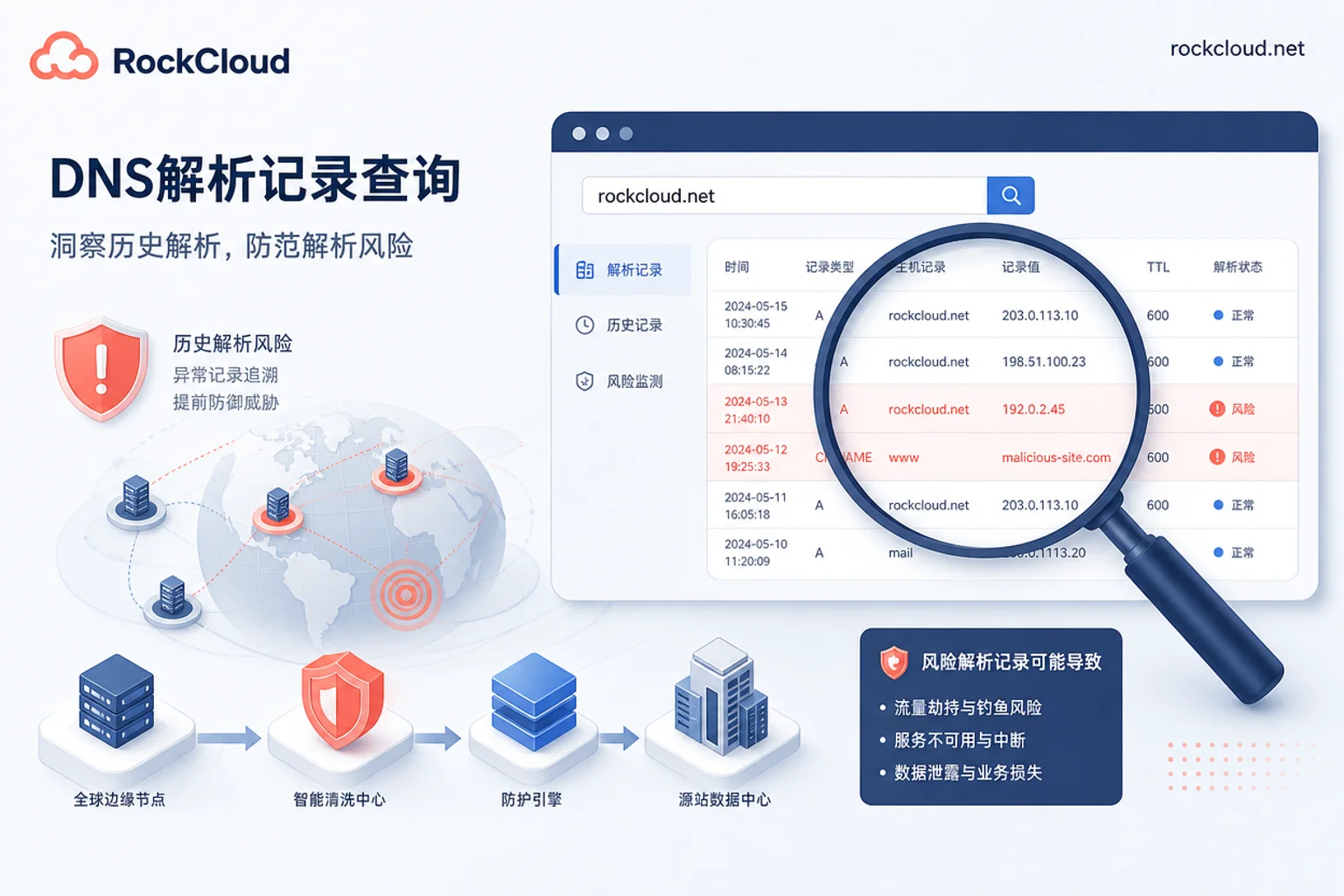
Leak Point 1: Historical DNS Records and Leftover A Records
Historical resolution records and passive DNS data from before CDN integration can render new protection ineffective. Attackers can obtain the pre-CDN origin IP by querying historical records. Self-check method: verify all current resolution records, remove any leftover A records pointing to the origin, and ensure no backup domains still resolve to the origin. Acceptance criteria: all public resolutions point to CDN or high-defense nodes, and the origin IP does not appear in any resolution results.
Leak Point 2: Services That Directly Connect Outbound from the Origin (Email, Notifications, etc.)
Services that initiate outbound connections directly from the origin (email sending, webhooks, active callbacks, update fetching) expose the outbound IP in packet headers and logs. For example, if the website sends emails via the origin's SMTP, recipients can see the origin IP in the email headers. Self-check method: check whether the email sending path uses an independent relay; compare the outbound IP with the origin IP. If they match, migrate email sending to a third-party email service or a separate relay IP.
Leak Point 3: Subdomains, Admin Panels, and Test Environments Not Behind the Edge
Many sites only put the main domain behind the CDN, while subdomains, admin panels, monitoring, object storage origin domains, and test environments still directly connect to the origin, often sharing the same IP or IP range. This effectively exposes the origin. Self-check method: list all subdomains and wildcard resolution records, identify services not behind the edge, and check CNAME records. If any subdomain resolves to the origin IP, attackers can locate and bypass the edge.
Leak Point 4: Non-HTTP Ports and Layer-4 Direct Probes – Why Just Changing DNS Isn't Enough
Attackers can locate the real origin via Layer-4 direct probes (e.g., TCP port scanning or service response characteristics) and then launch protocol-level attacks (e.g., SYN Flood, ACK Flood) mixed with application-layer CC attacks, consuming the origin's state tables and computing resources. The joint CISA and FBI advisory emphasizes that defenses must perform state validation and filtering at the edge nodes, such as SYN Flood protection. Simply changing DNS doesn't solve port direct connectivity, so self-check unnecessary open ports and service fingerprints, and close non-essential public ports on the origin.
Leak Point 5: Origin Configuration Leaks – Origin Host, Redirections, and Error Pages
Improper origin Host settings, 301/302 redirects that expose the origin address, or default error pages/debug pages that reveal backend information can leak the IP from behind the edge. Self-check method: compare edge responses with direct origin responses for headers and content, ensure the origin Host matches the public domain, and remove backend IPs or hostnames from error pages.
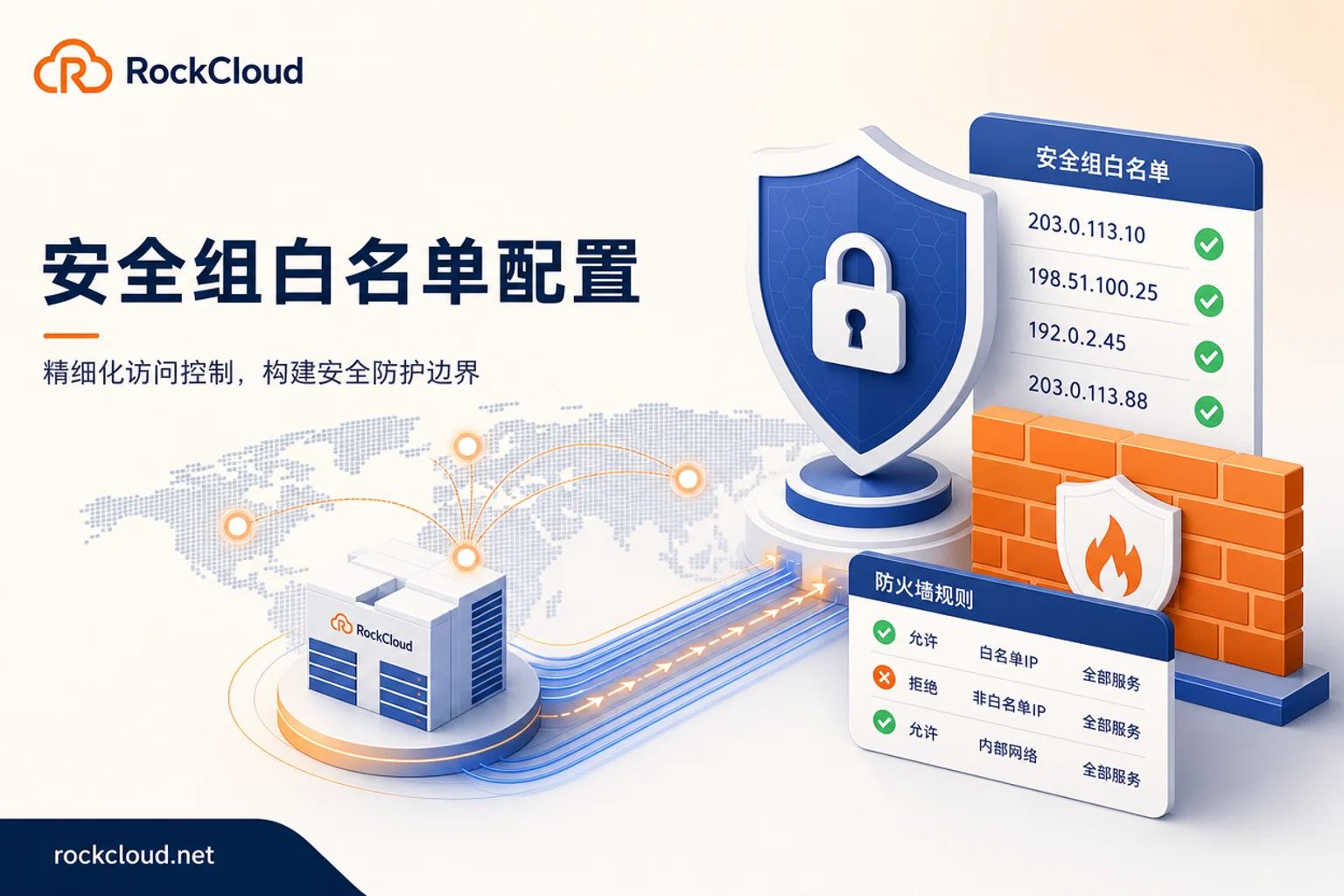
Closure Action 1: Whitelist Only CDN Origin IPs at the Origin – Security Group and Configuration
The most critical step to prevent real origin IP exposure is to allow only CDN origin IPs at the origin. Configuration order: first, configure security groups or network ACLs for the origin IP ranges, then restrict to necessary ports (80/443, etc.), and finally handle the default deny policy. Note: origin IP ranges may change, so establish a synchronization mechanism (e.g., regularly pull the official IP list). The release method and change frequency of origin IP ranges vary by provider; refer to the official IP list of the edge service being used. Side effects: health checks, internal office, and operations channels need separate allowances. Verification method: from any non-origin node, attempt to connect directly to the origin IP on ports 80/443; expected result is timeout or connection refused. Also, keep an operations whitelist to avoid locking yourself out.
Closure Action 2: Origin Authentication and Origin Shielding – Reducing the Origin's Exposure Surface
Beyond network-layer whitelisting, add another layer of source verification (such as origin authentication or dedicated origin identifiers) to prevent spoofed source IPs from bypassing the whitelist. Origin shielding (such as CDN's Origin Shield or origin convergence layer) reduces the number of nodes that directly reach the origin, lowering the probability of detection. This is an architectural closure, not a single-point switch.
Changing IP Is Not the End: After Changing IP, Still Attacked – Review Sequence
If the origin IP is changed and attacks continue, this is still part of preventing origin IP exposure. Possible reasons: the new IP has appeared in public resolution or outbound links; the whitelist is not actually effective; there are still assets not behind the edge; or the attack is not bypassing the origin but targeting the edge. Review in order: first confirm whether the new IP has been exposed; then test direct connection with a non-origin IP to verify the whitelist denies; then enumerate subdomains and outbound services; and finally distinguish attack types, referring to the DDoS incident response.
RockCloud's Role in Origin Protection and Origin Shielding
RockCloud's high-defense CDN origin IP whitelist corresponds to the "Access Control" row in the checklist; origin protection corresponds to the "Origin Configuration" row; and Anycast global node origin shielding corresponds to exposure surface compaction. We recommend first running through the self-checks in the table above, then re-verify the implementation of origin IP range maintenance and origin access control.
Origin IP Exposure Self-Check Checklist (Ready to Use)
The table below compresses all actions for preventing real origin IP exposure into a single-page checkable list.
| Check Item | Action | Pass Criteria |
|---|---|---|
| Resolution Records | Verify all A records/CNAMEs | No record points to origin IP |
| Email Sending | Check email header outbound IP | Outbound IP differs from origin IP |
| Subdomains | List all subdomains and check resolution | All subdomains go through CDN or are isolated on origin |
| Ports and Services | Scan public ports | Only necessary ports like 80/443 are open |
| Origin Configuration | Compare edge vs direct responses | No origin IP or hostname leakage |
| Access Control | Non-origin IP direct connection test | Connection refused |
Frequently Asked Questions
Can sending emails from the website leak the server's real IP?
Yes. If emails are sent directly via the origin's SMTP, recipients can see the origin IP in the email headers. You should migrate email sending to an independent relay or third-party email service to ensure the outbound IP is separate from the origin.
Can subdomains not behind the CDN expose the main site's origin?
Yes. If subdomains share the same IP or IP range as the main site, attackers can locate the origin via subdomain resolution. You should either put all subdomains behind the CDN or use separate IPs for isolation.
How do I configure the origin to only allow CDN origin IPs?
In the cloud security group or network ACL, allow only the CDN origin IP ranges and deny all other sources by default. You need to synchronize changes to the origin IP ranges and separately allow health checks and operations IPs.
Why am I still attacked after changing the origin IP?
Possible reasons include: the new IP has been exposed through resolution, email, or subdomains; the whitelist is not actually effective; or there are assets not behind the edge. Check each item in order as per the review sequence.
Is it necessary to change the origin IP if it has leaked?
Not necessarily. If the whitelist is correctly configured, attackers cannot connect directly to the origin, so you may not need to change the IP. However, if there are clear records or outbound exposure, it is recommended to change and update the whitelist accordingly.



Comments(0)